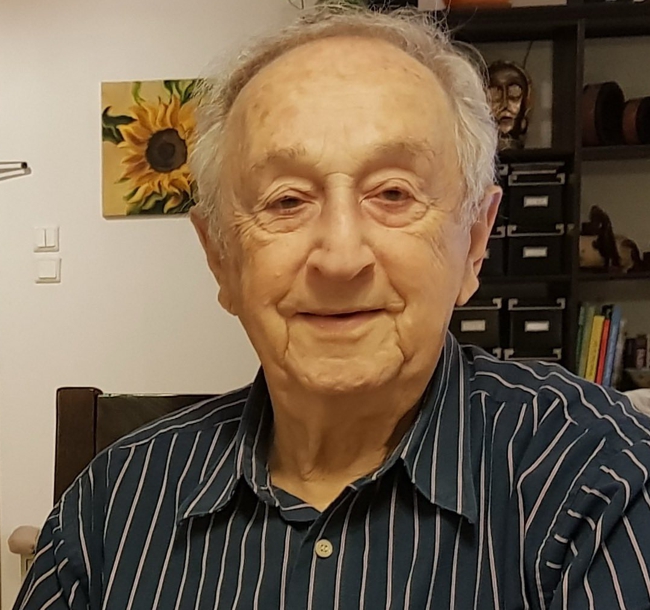
Dr. Shmuel Yerushalmi ז״ל (1934–2025)
Pacemaker Pioneer and Builder of Israel’s Biomedical Industry
I was deeply saddened to learn of the passing of Dr. Shmuel Yerushalmi ז״ל, a pacemaker pioneer whose work has been central to my research on the early history of implantable cardiac devices in Israel, and whom I had planned to visit during my current stay in the country.
Dr. Yerushalmi’s death marks the loss of one of the key figures in the formative period of Israel’s implantable medical device industry. He was an engineer whose career bridged academic research, industrial development, and the practical challenges of bringing life-sustaining technology to patients.
Born in Brazil, Dr. Yerushalmi immigrated to Israel in 1956, at a time when the country itself was still in the early stages of building its scientific and industrial infrastructure. Trained as an engineer and later completing his doctoral work at the Weizmann Institute of Science, he became part of a small but highly motivated cohort working to establish advanced technological capabilities in Israel.
During the late 1970s, Dr. Yerushalmi played a central technical role in the development of Israel’s first domestically produced implantable cardiac pacemakers. This work was carried out within the Israeli operations of Mennen Medical. The devices that he and his team developed were not merely a local reproduction of existing technology, but a technologically sophisticated system that was well ahead of its time.
By contemporary standards, the devices reflected an unusually advanced integration of lithium power technology, circuit reliability, and microelectronics. Many of its design choices anticipated trends that would only later become standard across the broader pacemaker industry. That such a device could be conceived, engineered, and manufactured in Israel at that time speaks directly to Dr. Yerushalmi’s technical vision and rigor.
As discussed in a prior post on this site, the challenges involved were substantial, ranging from circuit design and power-source integration to hermetic packaging and production quality systems. Dr. Yerushalmi was deeply involved in solving these problems, helping to translate academic expertise into a manufacturable, clinically viable device at a time when Israel had little prior experience in implantable electronics.
Dr. Yerushalmi’s contributions extended well beyond a single product. He was instrumental in establishing local capabilities that would later become foundational to Israel’s biomedical sector. This included acquiring specialized equipment from abroad, developing in-country expertise in precision welding and device encapsulation, and fostering close ties between academic laboratories and industrial development teams.
These early, often under-recognized efforts helped establish the technical culture, interdisciplinary collaboration, and tolerance for risk that continue to characterize Israel’s medical-technology sector today. The same pioneering mindset that enabled the development of Israel’s first implantable pacemakers has since propelled the country to the forefront of innovation across cardiac rhythm management, neurostimulation, imaging, digital health, and minimally invasive therapies.
In later years, Dr. Yerushalmi played a pivotal role in the creation of one of Israel’s early technology incubators, designed to help young engineers and scientists translate ideas into working products. This work foreshadowed the incubator and startup ecosystem that has become a defining feature of Israeli medical and high-technology innovation.
Hebrew obituary notices published following his passing describe Dr. Yerushalmi not only as a pioneering engineer but as a devoted family man and a deeply engaged member of his community. He was remembered as an “איש עתיר זכויות”- a man of great accomplishments – who combined professional rigor with personal integrity.
He is survived by his wife Sara, with whom he recently celebrated seventy years of marriage; by his son Naor Yerushalmi and daughter-in-law Noga; and by their children. He was also the father of Yoav, who was tragically killed in a military helicopter accident in 1977. The large attendance at Dr. Yerushalmi’s funeral reflected the breadth of his impact both professionally and personally, and the esteem in which he was held by colleagues, neighbors, and family alike.
From the vantage point of today’s highly sophisticated implantable cardiac devices, it is easy to overlook how fragile and uncertain early efforts in this field once were. Dr. Yerushalmi belonged to the generation that worked without precedent, without established supply chains, and often without assurance that their efforts would succeed. That Israel now occupies a leading position at the forefront of global medical-device innovation owes much to the groundwork laid by engineers like him.
For those of us who study and document the history of pacing and implantable technologies, Dr. Yerushalmi’s work is not merely a footnote, but rather a cornerstone.
A Personal Reflection
I was fortunate to speak with Dr. Yerushalmi at length while researching the early Israeli pacing effort. He was generous with his time, candid about the technical and organizational constraints of the period, and clearly proud of what his small and determined team was able to accomplish under challenging circumstances. Those conversations added depth and context that no document alone can provide, and they reinforced my appreciation for how much of Israel’s present-day medical innovation rests on the quiet achievements of this earlier generation.
May his memory be a blessing, and may his work continue to inspire those who design and build the devices that sustain and improve human life.
יהי זכרו ברוך