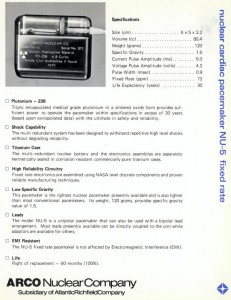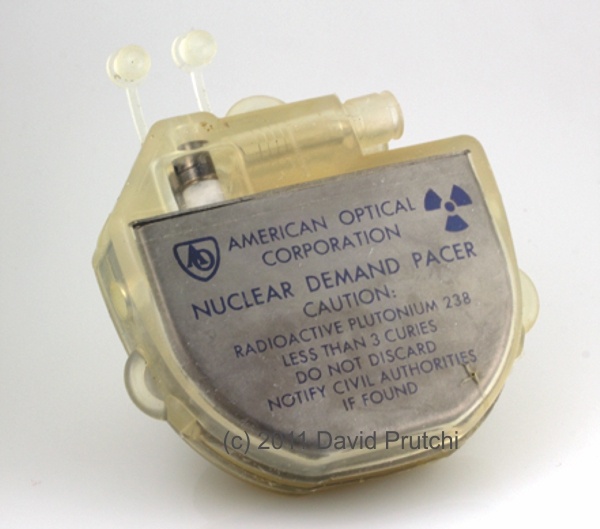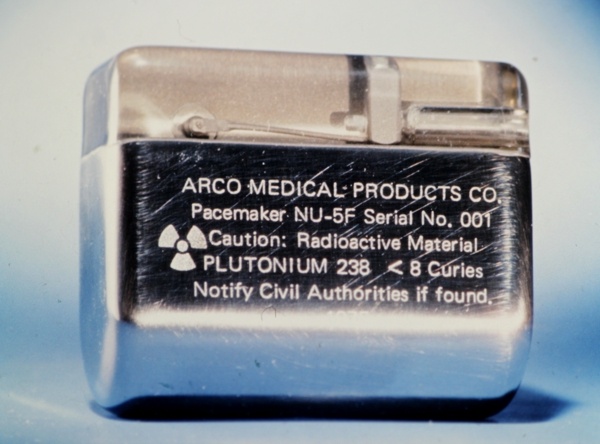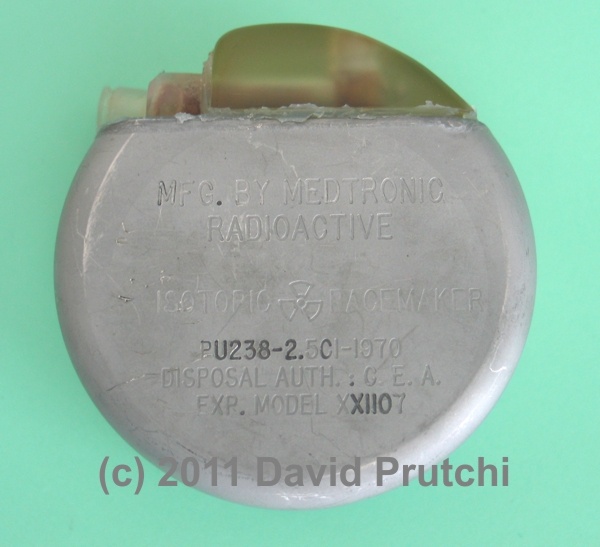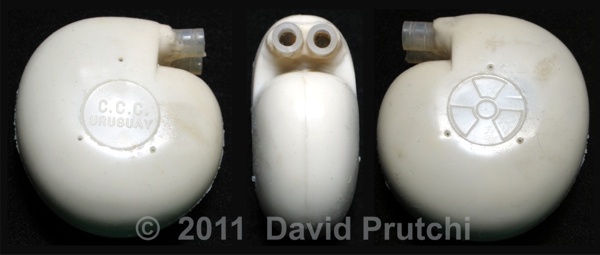

Coratomic, Inc. was a cardiac device manufacturer based in Indiana, Pennsylvania. It was one of a handful of American firms that developed and marketed plutonium-238 radioisotope-powered pacemakers in the 1970s. Coratomic grew out of the Allegheny General Hospital nuclear-pacemaker program led by George J. Magovern, Sr., with David L. Purdy as the key technical founder and executive, and Nicholas P. D. Smyth as a principal clinical collaborator.
The initial enthusiasm for Pu-238 pacemakers waned as regulatory complexity, public concern about implanted nuclear material, and the improving longevity of lithium-chemistry cells converged. Like the other pacemaker companies of the time, Coratomic abandoned the development of radioisotope-powered devices and concentrated on lithium-powered pacemakers.
A few months ago, I was contacted by Tim Vore, a resident of Indiana, Pennsylvania, where Coratomic pacemakers were manufactured. He had found a few demo models at an estate sale, tucked inside an old, beaten-up desk in an attic. I acquired these from him (with his permission to tell the story of where he had found them).
Upon receiving them, I x-rayed the units and confirmed that they are all weighted mechanical dummies, except for one of the Ovalith units in which half of the shell had been cut open and the pacemaker’s internals were encapsulated to display their microcircuit (still using miniature, albeit discrete, components) and battery. The collection also included a few setscrew wrenches and hybrids encapsulated in dual-in-line metallic chip carriers.
In 1986, Coratomic changed its name to Biocontrol Technology, Inc., exited the pacemaker business, and focused increasingly on other medical technologies, notably a non-invasive glucose monitor.
A 2002 Pittsburgh Tribune-Review article states that “Bico, formerly known as Biocontrol Technology Inc., and before that, Coratomic Inc.” had accumulated large losses. Not surprisingly, in March 2003 Bico Inc. filed for Chapter 11 bankruptcy protection in federal court in Pittsburgh. As part of its court-approved reorganization, it later merged with cXc Services, Inc. – a small, privately held Delaware start-up created in 2003 to commercialize a “WebPhone” videophone product – marking a complete departure from its origins in implantable cardiac devices.