Image Credit: St. Jude Medical

Image Credit: St. Jude Medical

The Medtronic Chronicle implantable hemodynamic monitor used a specialized RV lead/sensor. The device was able to monitor and telemeter:
NDI Medical was founded in 2002 by Geoffrey B. Thrope to develop and commercialize neurodevice products. NDI Medical developed the MicroPulse neurostimulator, a thumb-sized, rechargeable pulse generator, that has been used for the treatment of incontinence and pain, as well as an implantable device for the restoration of function of paralyzed limbs.
According to a 2006 news release by the electronics assembly manufacturer for the MicroPulse:
“Using minimally-invasive surgery, the Micropulse is implanted into a patient, usually in the lower abdomen or buttock, where the device is most comfortable and least visible. After implantation, a clinician uses a wireless programmer to set the Micropulse’s stimulus parameter and timing patterns. The programmer, as well as the patient’s controller for the device, has a range of about three feet.
To recharge the device’s lithium-ion battery, the patient applies a recharging patch for several hours to the vicinity of the implant. The battery needs recharging from once a month to every few weeks.” Continue reading→
Medtronic announced at TEDMED 2010 that it is working on leadless pacemakers. Dr. Stephen Osterle, senior vice president of medicine and technology and member of Medtronic’s Executive Management Team, unveiled the device. Osterle said that physicians will be able to control the device with a smart phone.
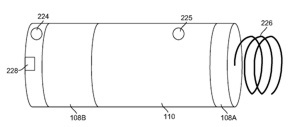
Nanostim is an early-stage AIMD company in Milpitas, CA that is developing a pacemaker that can be implanted inside the heart through a catheter. The tiny device is attached directly to the heart, eliminating the need for leads.
In May 2011 Nanostim announced that St. Jude Medical had made a substantial investment in the company.
The company is operating in stealth mode, but some details about the leadless pacemaker have emerged from Nanostim’s patents and patent applications. An interesting detail is about the possible use of a betavoltaic power source: Continue reading→

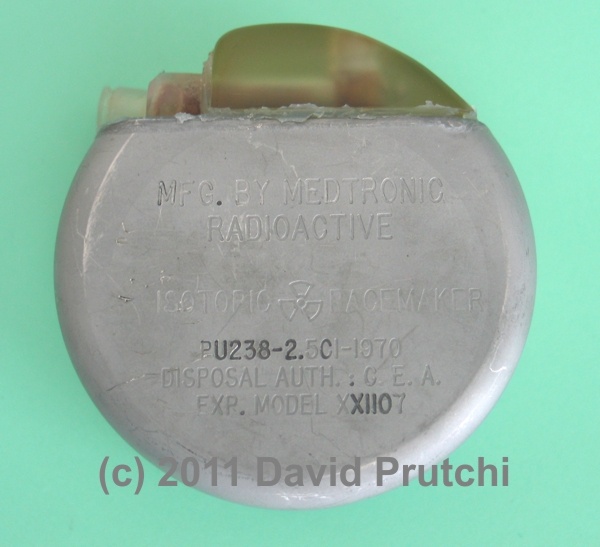
In the late 1960s Medtronic – today the largest manufacturer of implantable medical devices in the world – teamed up with Alcatel, a French company, to design a nuclear-powered pacemaker. The first human implant of the device took place in Paris in 1970.
The nuclear battery in the Medtronic device used a tiny 2.5 Ci slug of metallic Plutonium 238 (Pu-238). The radiation produced by the Pu-238 bombarded the walls of its container, producing heat that a thermopile then converted to an electrical current. A thermopile is a stack of thermocouples, which are devices that convert thermal energy directly into electrical energy using Seebeck effect. A thermocouple is made of two kinds of metal (or semiconductors) connected to each other in a closed loop. If the two junctions are at different temperatures, an electric current will flow in the loop. Continue reading→
Transneuronix, Inc. was founded in 1995 and was based in Mount Arlington, New Jersey. It was acquired by Medtronic in 2005.
Before its acqusition by Medtronic, Transneuronix developed the Transcend, an implantable gastric stimulator device for the treatment of obesity by electrical stimulation of the stomach. Later, Medtronic developed the Transcend II IPG. Continue reading→
The November issue of Evaluation Engineering carried an article by Tom Lecklider on the amount of work invested by Medtronic to develop and test the Revo MRI pacemaker system. The article is available on-line at Evaluation Engineering (Click here for direct link to the November 2011 issue).