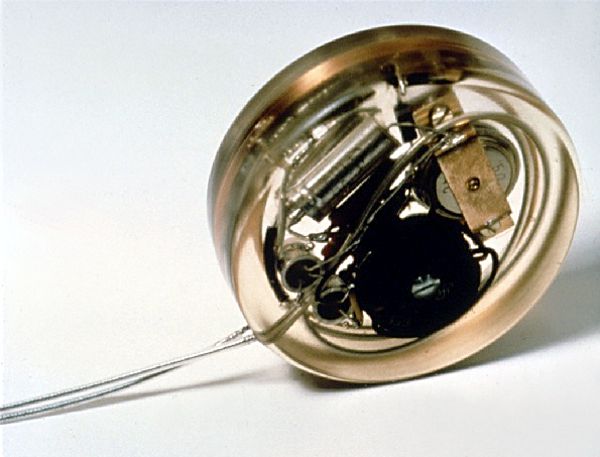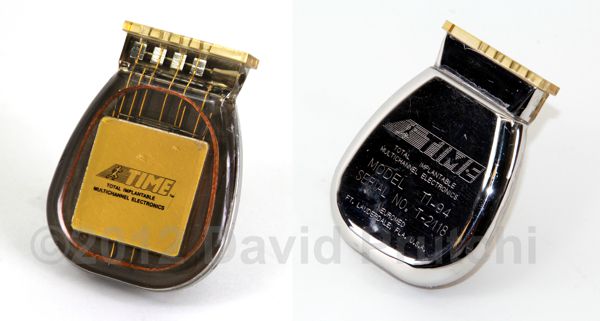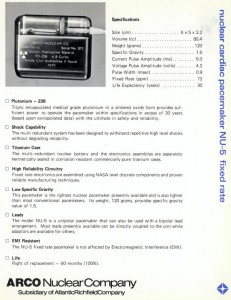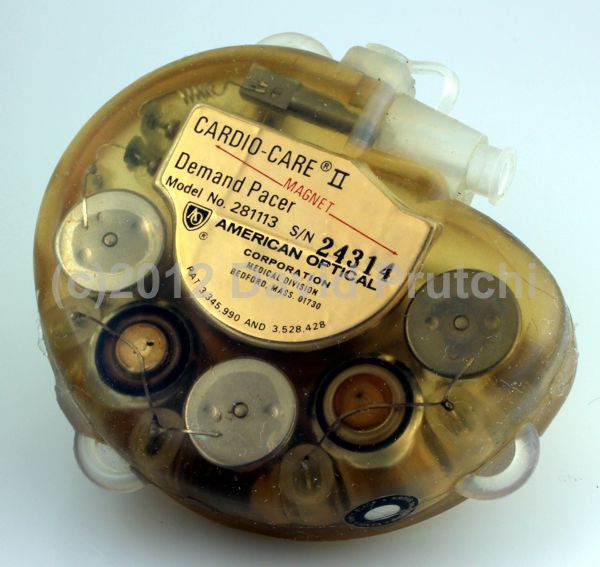
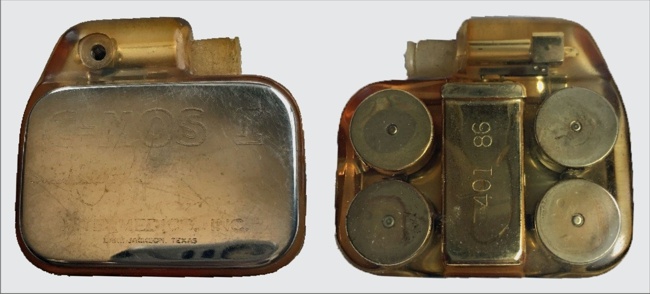
Intermedics C-MOS-I Pacemaker. Image credit: Michael Sklanowsky
In 1973, former Medtronic sales representative Albert Beutel founded Intermedics in Freeport, TX. The company’s first product was the C-MOS-I implantable pulse generator – a small (for the time), mercury-cell-powered pacemaker.
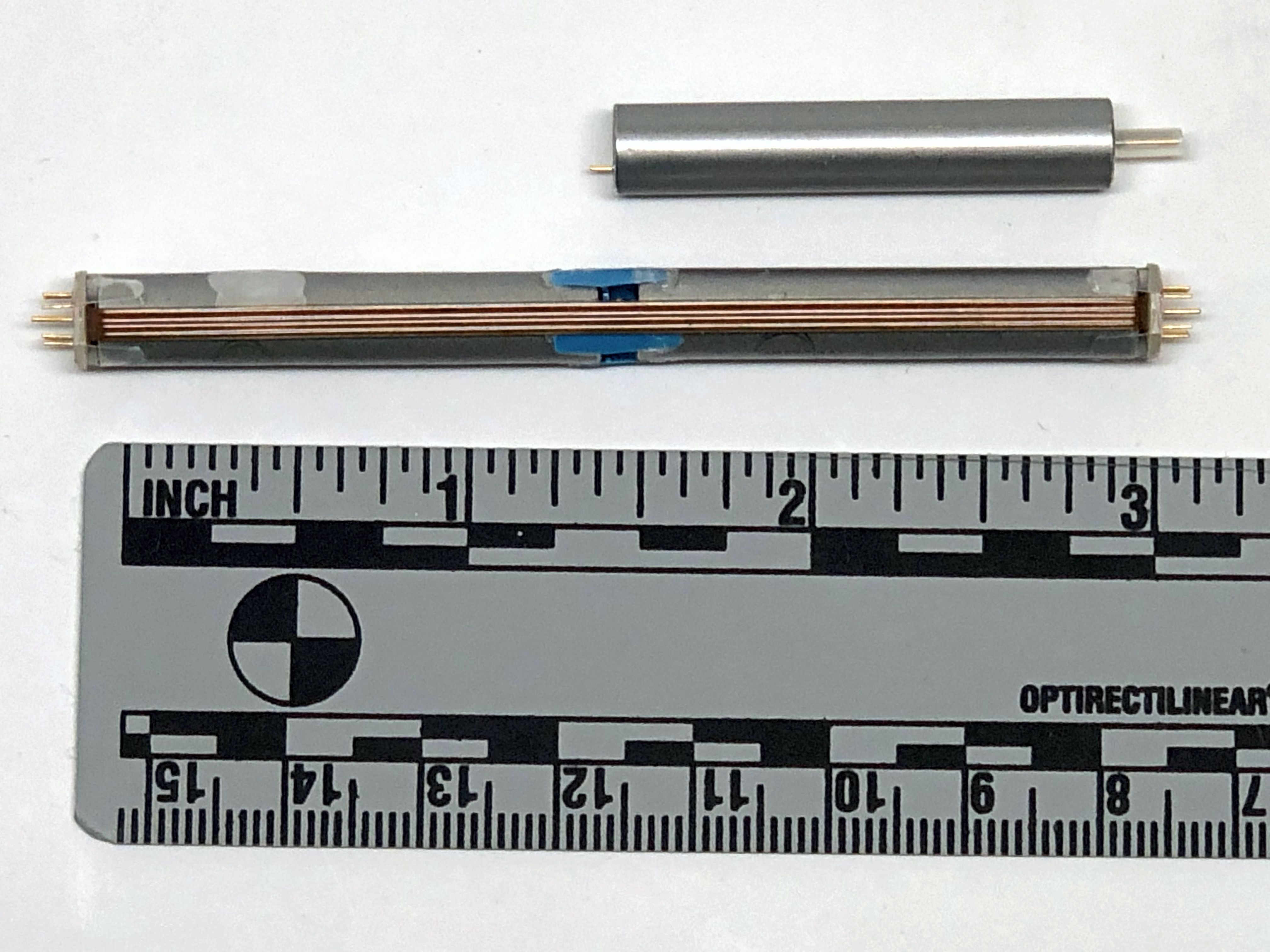
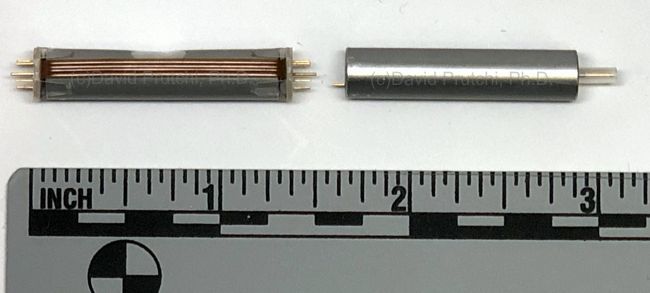
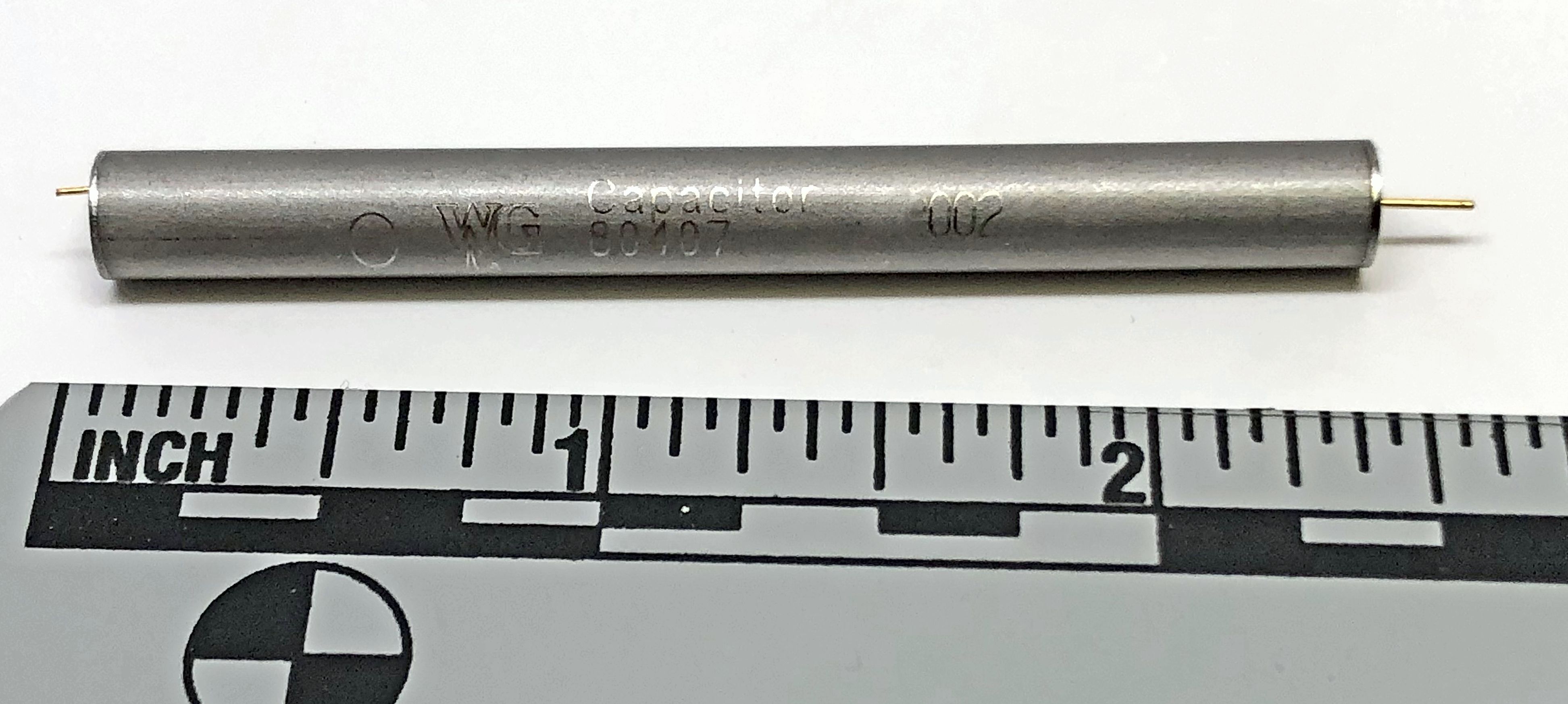
Mike Sklanowsky shared pictures of a C-MOS-I sample that he owns. Mike was a software consultant to Intermedics in Freeport around 1974, where he developed the first computerized pacemaker tracking and product recall software. Through his software, Intermedics tracked pacemaker locations and movement through distribution warehouse shelves, hospitals, clinics, doctors, nurses, patient notification of expiring battery charge, product recall communications, follow-ups, etc.
Before Intermedics, Mike worked for JPL, which was his first full-time job upon graduating from UCLA. At JPL he worked on problems related to celestial mechanics, spacecraft orbit determination, trajectory analysis, instrument operations, and human interfaces for real-time command and control. His first project was Mariner 9 Mars, which became the first man-made satellite to orbit another planet.
Mike, and fellow UCLA graduate Bob Patterson were the only two people from their class to get hired by JPL. Bob’s mentor, Prof. Ken Nobe involved both with Intermedics. Dr. Robert (Bob) Patterson was an expert in long-life lithium battery technology for space exploration, and his work for Intermedics led to the 1974 development of a lithium-powered version of C-MOS-I, followed in 1976 by InterLith which was hermetically sealed, and weighed just 65 grams.

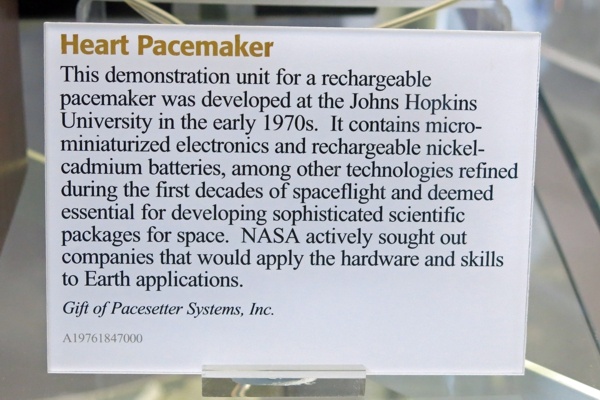
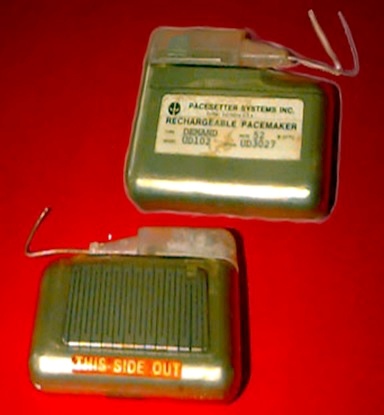 I can’t remember exactly where I found the picture of a Pacesetter model BD102 VVI, but the story behind it is documented by Kirk Jeffrey in “Machines in our Hearts”:
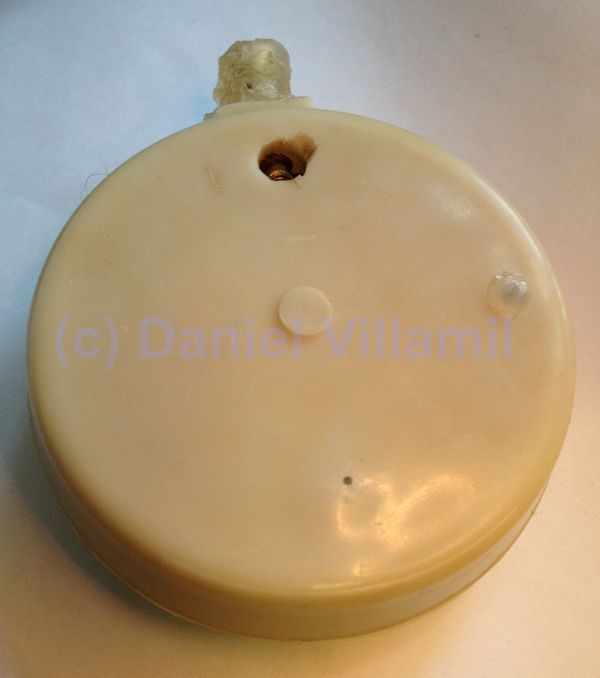

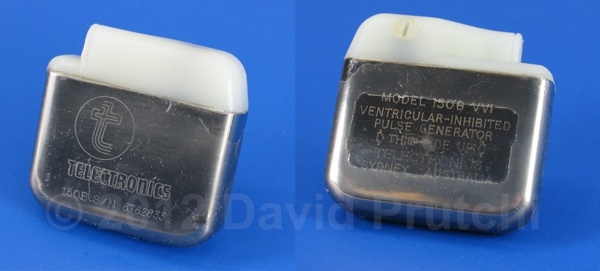 In 1965, Australian medical device pioneer Noel Gray established Telectronics – Australia’s first manufacturing facility for producing pacemakers that were designed in-house. Telectronics was an innovative developer, achieving some major successes in the early cardiac pacing field, for example, Telectronics’ leads allowed narrowing the pacing pulse to its current nominal of 0.5 milliseconds; encapsulating the pacemaker in titanium instead of epoxy; using a microplasma weld to join the two halves of the pacemaker capsule; creating one of the first rate-responsive ‘demand’ pacemakers; and isolating the pacemaker’s battery in a separate compartment to deal with the problem of leaking mercury-zinc batteries.