Last weekend I had the pleasure of visiting Dr. David Delman, an electrical engineer and physician who had worked at Avery Laboratories. Dr. Delman showed me several examples of Avery’s radiofrequency-powered diaphragm pacing equipment, including an external transmitter, antenna, and implanted receiver. The transmitter’s coupling coil immediately caught my attention because it is essentially identical to the external coil used with the Cutler-Hammer/Airborne Instruments Laboratory RF cardiac pacemaker developed for William W. L. Glenn about a decade earlier. That resemblance is especially interesting because the two systems share a common technological background.
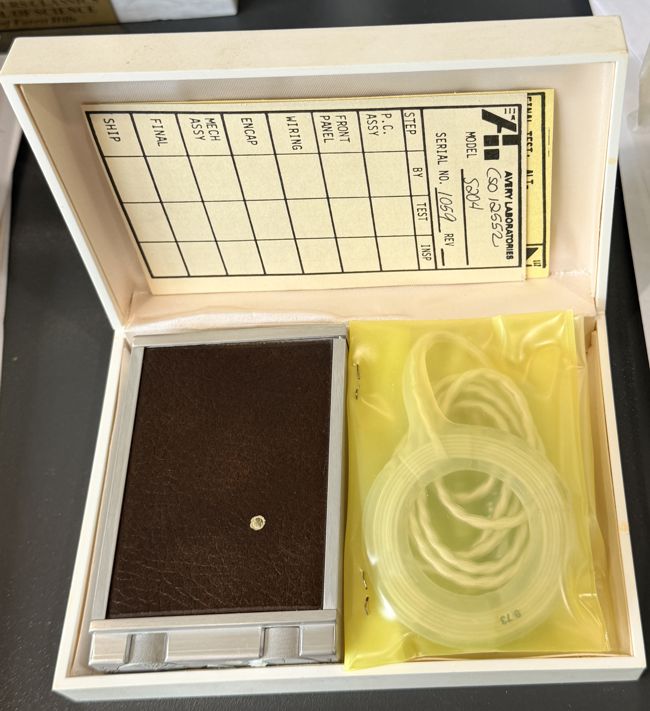
Avarey Laboratories external RF transmitter
The RF-powered cardiac pacemaker developed by Glenn and Alexander Mauro in the late 1950s transferred energy across intact skin to a simple implanted receiver. During the 1960s, Glenn and his colleagues at Yale extended this approach to stimulation of the phrenic nerve, allowing electrical pacing of the diaphragm in patients unable to breathe adequately on their own. In collaboration with engineer Roger E. Avery, these experimental systems were developed into a practical device, and Avery Laboratories began commercial distribution of its diaphragm pacemaker in 1971.
Like the earlier cardiac system, the Avery diaphragm pacemaker used an external battery-powered RF transmitter and a coil placed over a passive implanted receiver. The implant contained no battery. It converted the transmitted RF energy into electrical stimuli delivered to an electrode on the phrenic nerve. Rather than producing a single stimulus for each heartbeat, the diaphragm pacemaker delivered trains of pulses that gradually contracted the diaphragm to produce inspiration, followed by relaxation for expiration. In this way, a technology originally developed for cardiac pacing found a durable second application in respiratory support.
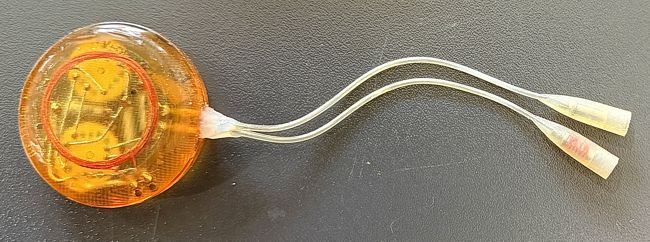
Avery Laboratories was an also an early commercial spinal cord stimulation company, offering an SCS system in the early 1970s. A 1971 Electronic Design article about Avery Laboratories stated that says that Roger Avery, initially working as a consulting engineer, developed the electronics for an early neurostimulator based on the Melzack-Wall “gate control” theory of pain. The system consisted of an external battery-powered transmitter, external coupling antenna, subcutaneously implanted passive RF receiver, and implanted spinal cord electrode. By April 1971, approximately 300 Avery neurostimulators had already been supplied, including 150 during the preceding year.
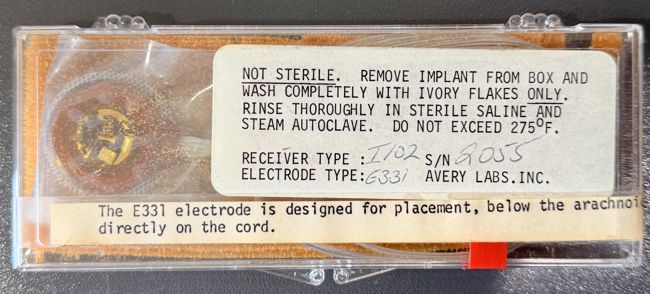
Avery Laboratories’ Spinal Cord Stimulation Receiver
Avery Laboratories was originally based in Farmingdale, New York, the company later operated in Glen Cove, remaining on Long Island. Roger Avery sold the company in 1983 to biomedical engineer William H. Dobelle, who continued development of its implantable neurostimulation technology until his death in 2004. The following year, Avery Laboratories was renamed Avery Biomedical Devices. In 2015, three longtime employees, Dilys Gore, Tony Martins, and Linda Towler, acquired the company. Avery’s manufacturing operations are now located in Commack, New York, where the company remains in business today. More than half a century after its first commercial diaphragm pacemaker, Avery continues to manufacture diaphragm pacing systems based on the same fundamental concept of transmitting power across intact skin to implanted receivers.
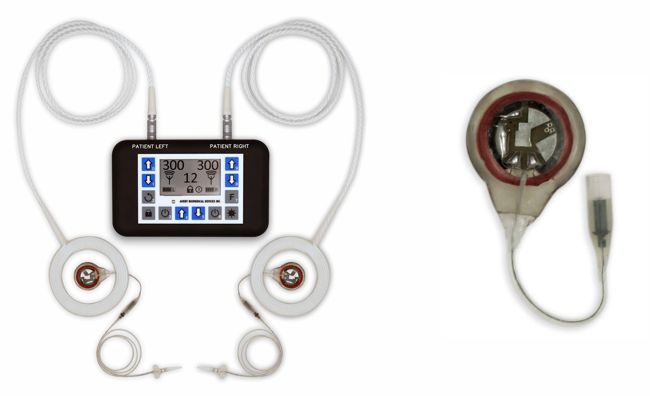
Currently marketed phrenic nerve stimulation system by Avery Biomedical Devices Inc. Image Credit: Avery Biomedical Devices Inc.
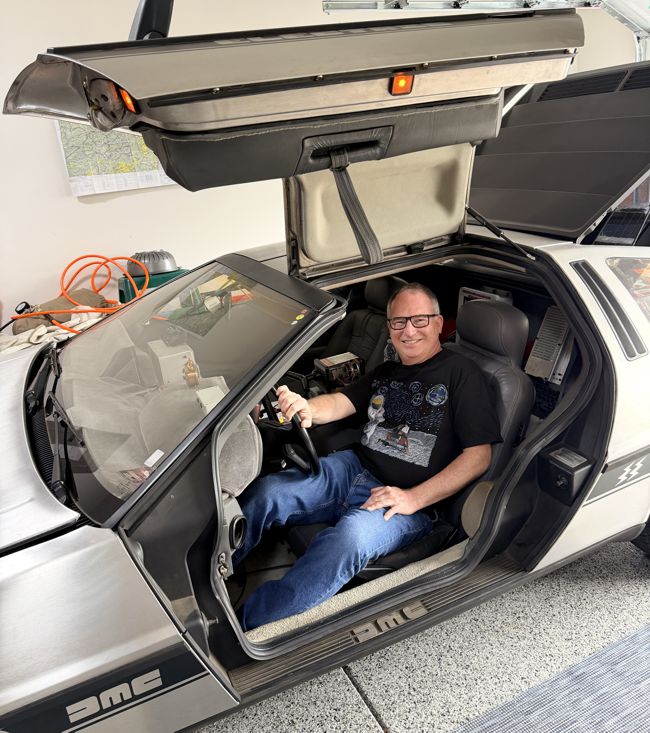
As fascinating as the implantable devices were, however, Dr. Delman’s coolest toy is something quite different. Sitting in his garage is a DeLorean that he converted to electric power, an appropriately ambitious project for an electrical engineer. And this is no ordinary electric DeLorean. In proper Back to the Future fashion, Dr. Delman equipped it with working displays for the time circuits and, of course, a flux capacitor. I did not ask whether it can actually generate 1.21 gigawatts, but I was careful not to set the destination date to 1959.