AIMD Workshop 2026 Summary
The 2026 edition of the Active Implantable Medical Devices (AIMD) Workshop, organized by ADCORPUS together with Delft University of Technology, took place on 4–5 June at the TU Delft Aula Congress Centre, gathering nearly 200 engineers, researchers, clinicians, entrepreneurs, and industry leaders from across the active implant community. Following the 2025 Barcelona edition, this year’s move to TU Delft reflected the workshop’s core aim of connecting industry and research around next-generation active implants.
Here is a summary kindly provided by Nicolás Barabino, PhD:
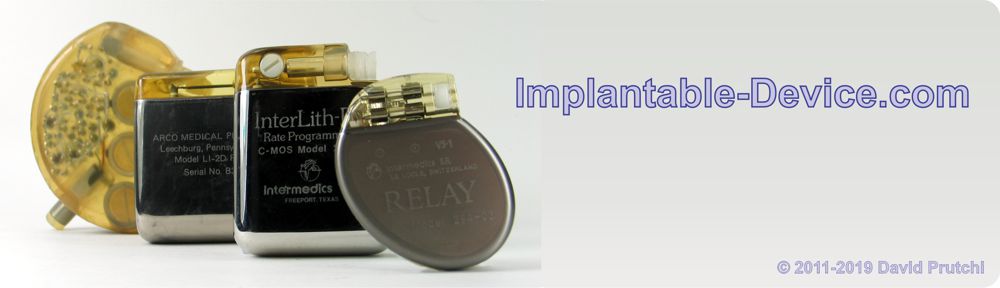
The two-day scientific program opened with keynotes by David Prutchi (Impulse Dynamics), who traced how the earliest pacemakers of 1958 shaped modern AIMDs, and Yao-Hong Liu (imec), who addressed the bandwidth and energy limits of implant telemetry.
From there, the program spanned much of the field. A neuromodulation and brain-computer interface session brought together Bert Monna (Phosphoenix), Denys Nikolayev (CNRS), Eduardo Fernandez (UMH Elche), Kambiz Nanbakhsh (Salvia Bioelectronics), and Nick Ramsey (UMC Utrecht), covering everything from cortical visual neuroprostheses to implantable neuromodulation for chronic migraine. Sessions on implantable sensors, with Achilleas Savva (TU Delft) and Danaë Delbeke (Indigo), explored biohybrid neural interfaces and continuous multi-metabolite monitoring.
Cardiac support devices featured prominently, with talks from David Prutchi on cardiac contractility modulation, François Cornat (Corwave) on a pulsatile-membrane LVAD, Libera Fresiello (University of Twente) on patient-specific soft-robotic simulation, and Max Haberbusch (Medical University of Vienna) on implantable hemodynamic sensing. A dedicated session on advanced AIMD fabrication brought perspectives from Anne Vanhoestenberghe (King’s College London), Danial Kiamarsi (NeuroBite) on dissolvable neural implants, and Kedar Shah on smart lenses.
The program also made room for perspectives beyond engineering. A panel on surgeon and patient perspectives, including Johan Frijns (LUMC) on cochlear implants and a cochlear-implant patient’s own account, grounded the technical discussion in clinical and human reality. A regulatory panel with Simon Lidgate (BSI), Bingshuo Li (Qserve), Victor Pikov (Medipace), Nick Ramsey (UMC Utrecht), and Johan van den Brink (Philips) examined how the evolving regulatory landscape is shaping the development of BCIs and beyond. Two industry panels, on the manufacturing of commercial AIMDs and on enabling technologies, added the supplier and commercialization viewpoint, with contributions from Osypka, Microdul, IC’Alps, Cisteo/TAME-CARE, FEMTOPRINT, and SCT Ceramics.
Alongside the talks, a poster exhibition showcased recent work from academic groups and industry, an industry hall connected developers with suppliers, and an evening Neurotech Bootcamp on 3 June, hosted by the NeuroTechHub, opened the event to early-career participants. Throughout, extensive networking created space for the informal conversations from which new collaborations often emerge.
A recurring theme, across both the scientific and industry sessions, was that the hardest problems in active implant development rarely belong to a single discipline: electronics, mechanics, materials, clinical needs, and regulatory strategy are deeply interdependent, and system design is increasingly treated as a first-order concern rather than a late-stage step.
The workshop was organized by ADCORPUS and TU Delft, with a program committee comprising Prof. Wouter A. Serdijn (TU Delft) and Nicolas Barabino, PhD, and Francesc Varkevisser, PhD (both ADCORPUS).
Planning for the next edition is already underway; companies and institutions interested in participating can reach the organizers at aimdworkshop@adcorpus.net.
Please see the following for the summary with photographs: AIMD Workshop 2026 Summary