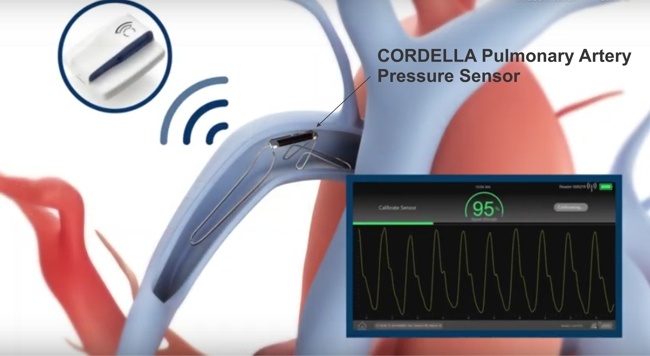
Edwards announced the acquisition of Endotronix, the maker of the Cordella implantable pulmonary artery pressure sensor that allows for early, targeted therapeutic intervention and was recently approved by FDA.
Implantable devices for the treatment of Congestive Heart Failure (CHF)
Edwards announced the acquisition of Endotronix, the maker of the Cordella implantable pulmonary artery pressure sensor that allows for early, targeted therapeutic intervention and was recently approved by FDA.
Endotronix announced that it received FDA’s PMA approval for its Cordella™ Pulmonary Artery (PA) Sensor System for the treatment of NYHA class III heart failure patients. According to Endotronix, “The Cordella platform is the first and only PA pressure-guided platform to offer comprehensive patient management using daily PA pressure and vital signs from home to guide therapeutic management and improve patient outcomes.”
According to the announcement:
“Cordella is a proactive HF management platform that delivers daily PA pressure and other vital data via an implantable sensor and user-friendly, non-invasive health tools, respectively, to a managing HF clinician for remote patient care. This information guides clinical decision-making and medication dosing while enhancing the adoption of guideline-directed medical therapy (GDMT) to reduce congestion and improve outcomes. Regulatory approval was based on the PROACTIVE-HF trial, which demonstrated a markedly low 0.159 rate of heart failure hospitalization and all-cause mortality at 6 months.”
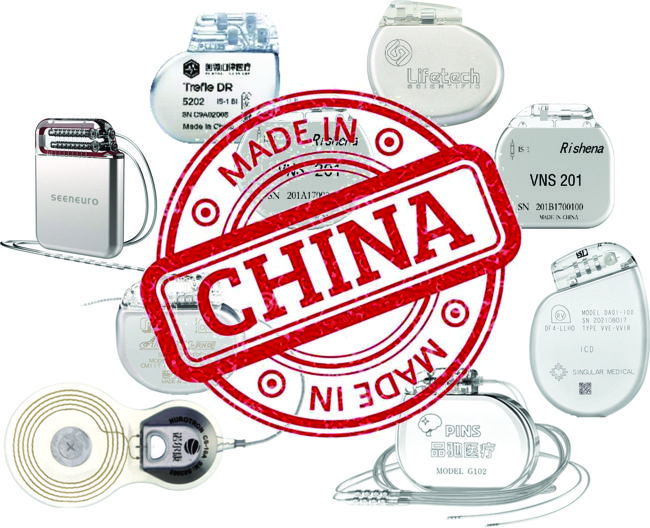
The 2015 “Made in China 2025” and subsequent domestic development initiatives have significantly benefited Chinese medical device manufacturers. The 2015 plan prioritized the expansion of high-tech device production with the goal of supplying 70% of China’s device market by 2025. More recently, in 2021, the Chinese government issued the 14th five-year plan (2021–25) that aims at making at least six Chinese companies reach the top 50 revenue-making medical device companies globally.
I was recently chatting with Victor Pikov at the First AIMD Workshop, and he mentioned that in the last couple of years the number of Chinese AIMD manufacturers have grown from 5 to over 10. I was really surprised about the progress that China has made in the AIMD field, so this blog expands on the list of Chinese AIMD companies that Victor compiled and kindly shared with me. Continue reading
 Impulse Dynamics, the company where I’m CTO and Executive VP, announced yesterday that it completed a $136M financing round to accelerate its commercial growth and advancing the development of pipeline products.
From the announcement:
“Marlton, NJ, Feb. 14, 2024 (GLOBE NEWSWIRE) — Impulse Dynamics plc, a global medical device company dedicated to improving the lives of people with heart failure (HF), is proud to announce that it raised $136 million in financing to accelerate investment in global commercialization, technology, product innovation, and further development of clinical evidence. The financing was led by Perceptive Advisors, Redmile Group, Alger, and Hobart Healthcare. This substantial investment reflects investor confidence in, and commitment to, the company’s vision and expansion.
…
The funding will fuel commercialization efforts, develop future product pipelines, and support groundbreaking clinical trials such as the INTEGRA-D and AIM HIGHer clinical trials. The INTEGRA-D trial is a multicenter study evaluating the combination of CCM and ICD therapy in a single device – the Optimizer Integra CCM-D System. The AIM HIGHer clinical trial is a multicenter study with the objective to evaluate the safety and efficacy of CCM therapy in patients with symptomatic HF with an ejection fraction (EF) of 40 to 60 percent (inclusive). The trial is currently in its initial enrollment phase and has generated significant attention, feedback, and excitement among experts in HF.”
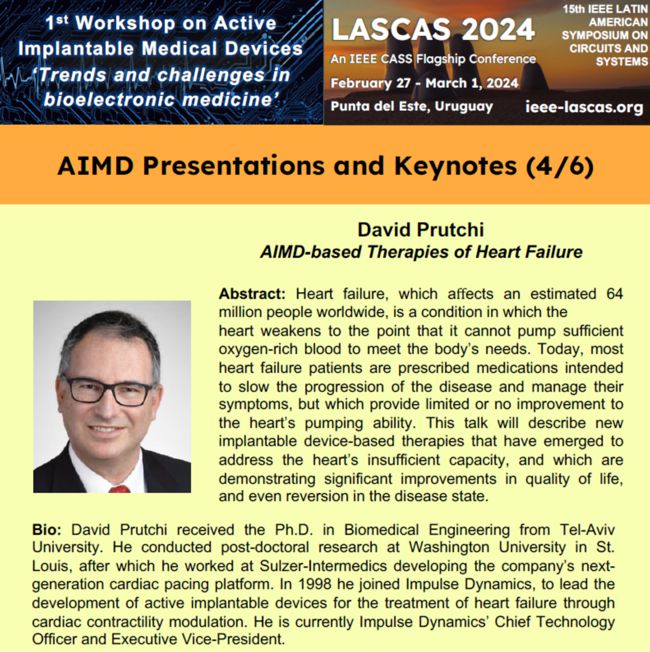
I’ll be presenting the keynote “AIMD-based Therapies of Heart Failure” at the First Workshop on Active Implantable Medical Devices dedicated to understanding the trends and challenges in bioelectronic medicine.
For the complete announcement of the workshop with some great talks by Rikky Muller (UC Berkeley), Pedro Arzuaga (Impulse Dynamics), Marcelo Barú (Biotronik), Federico De Mula (Integer), and Victor Pikov (Medipace) click here: AIMD Workshop LASCAS 2024 Program.
Endotronix, announced the submission of a Premarket Approval (PMA) application for its Cordella™ Pulmonary Artery (PA) Sensor System to the FDA.
According to the announcement:
“Cordella is an innovative HF patient management platform that delivers proactive PA pressure data and non-invasive vital health data for comprehensive heart failure management at home. Its user-friendly devices securely transmit daily health information to the managing clinician, supporting optimal dosing of guideline-directed medical therapy (GDMT) to reduce congestion and engaging patients with trended health data to enable healthy lifestyle choices.”
In April 2023 Endotronix completed the enrollment of its PROACTIVE-HF pivotal study. Primary endpoint data from the trial is expected to support the PMA Application.

Image Credit: Lepu Medical Technology (Beijing) Co., Ltd.
Chinese Lepu Medical Technology (Beijing) Co., Ltd. announced on LinkedIn on January 5, 2024 that it had been granted “Green Channel” review status by the NMPA for its Implantable Cardiac Contractility Modulator (ICCM).
According to the LinkedIn post, the device to be reviewed by the Chinese NMPA is “an implantable pulse generator that utilizes cardiac contractility modulation therapy to treat symptoms in patients with heart failure. This product is suitable for adult patients with New York Heart Association (NYHA) functional class III or IV heart failure, aiming to improve the patients’ 6-minute walking distance, quality of life, and cardiac functional status.”
Despite Lepu’s claim in the post that “the adoption of cardiac contractility modulation therapy is the first of its kind in China,” in fact, Cardiac Contractility Modulation was pioneered by Impulse Dynamics which has had commercial approval in China for its OPTIMIZER CCM™ devices since 2017.

Impulse Dynamics, the company for which I am the CTO, announced that FDA has approved full-body MRI-conditional labeling for the OPTIMIZER Smart Mini IPG. According to the announcement:
“The Optimizer Smart Mini system delivers the company’s proprietary CCM® therapy. This conditional approval expands the product labeling to allow for full-body magnetic resonance (MRI) diagnostic imaging with 1.5 and 3.0 Tesla (T) scanners. The approval for use with full-body MRI covers new patients adopting CCM therapy as well as existing Optimizer Smart Mini users.”

Image credit: Impulse Dynamics
Impulse Dynamics, the company where I am the CTO and Executive VP of Product Development, announced on May 18, 2023 the completion of the first implantation for the INTEGRA-D clinical trial, designed to evaluate the safety and efficacy of two proven cardiac therapies combined — CCM® and an implantable cardioverter defibrillator (ICD) — in a single device (CCM-D). The Optimizer® IntegraTM CCM-D System delivers CCM therapy to improve quality of life and reduce heart failure symptoms, and ICD therapy to treat life-threatening arrhythmias that may cause sudden cardiac death. The investigational technology is rechargeable with long battery life, potentially reducing the need for replacement procedures.
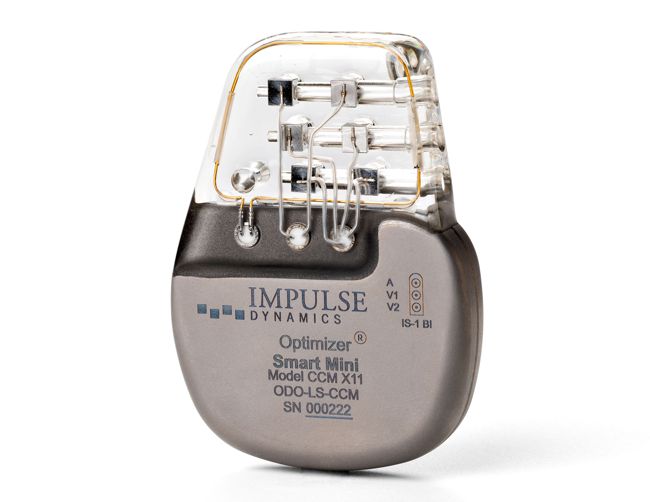
Image Credit: Impulse Dynamics
Back on April 29, 2022, Impulse Dynamics, the company where I am the CTO and Executive VP of Product Development, announced both FDA and CE Mark approval and the official commercial launch of the Optimizer® Smart Mini System.
According to the press release:
The Optimizer Smart Mini delivers CCM therapy — Impulse Dynamics’ proprietary technology — to the heart. CCM therapy has been designed by Impulse Dynamics to significantly improve heart contraction, allowing more oxygen-rich blood to be pushed out through the body. CCM therapy is indicated to improve 6-minute hall walk, quality of life, and functional status of NYHA Class III heart failure patients who remain symptomatic despite guideline-directed medical therapy, are not indicated for CRT, and have a left ventricular ejection fraction ranging from 25 to 45 percent.
The OPTIMIZER Smart Mini offers increased battery longevity of 20 years (compared to 15 years in the previous generation), advanced HF diagnostic monitoring capabilities (e.g., heart rate, heart rate variability, patient posture and position), and remote patient monitoring features that will be activated in the near future.

On March 14, 2022, Impulse Dynamics (of which I am the CTO and Executive VP) conducted the first implant of a patient in its AIM HIGHer trial. The goal of the blinded study is to evaluate the performance of CCM Therapy to treat heart failure in a population with high ejection fraction (LVEF between 40% and 60%, inclusive).
According to the press release:
“Patients can have HF with severely reduced, moderately reduced, or even preserved ejection fraction (e.g., EF close to the normal range of 60% or above.) Those patients with severely reduced or moderately reduced EF have therapeutic options, including many classes of pharmaceuticals and device therapies such as CCM. However, HF patients with higher EF (e.g., above 40%) have had few therapeutic options thus far to alleviate their symptoms and treat their disease. The purpose of AIM HIGHer is to assess the potential of CCM to improve performance and reduce cardiovascular morbidity and mortality for these patients.
…
The Optimizer delivers cardiac contractility modulation therapy — a proprietary technology of Impulse Dynamics — to the heart. Impulse Dynamics has designed CCM therapy to significantly improve heart contraction, allowing more oxygen-rich blood to be pushed out through the body. This breakthrough device has demonstrated its capability of enhancing the quality of life for HF patients no longer responding adequately to medication meant to manage their symptoms.”
AIM HIGHer is the largest randomized sham-controlled therapeutic cardiac device trial to ever be conducted.
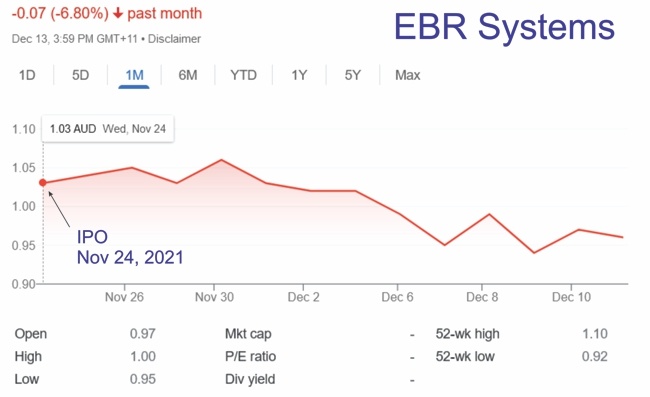
On November 24, 2021, EBR Systems went public in the Australian stock exchange. According to the press release, the IPO raised AU$110M (around $78.5M). EBR pland to use these funds to complete its pivotal study, targeting FDA submission for approval in 2023 followed by rapid U.S. commercial launch.
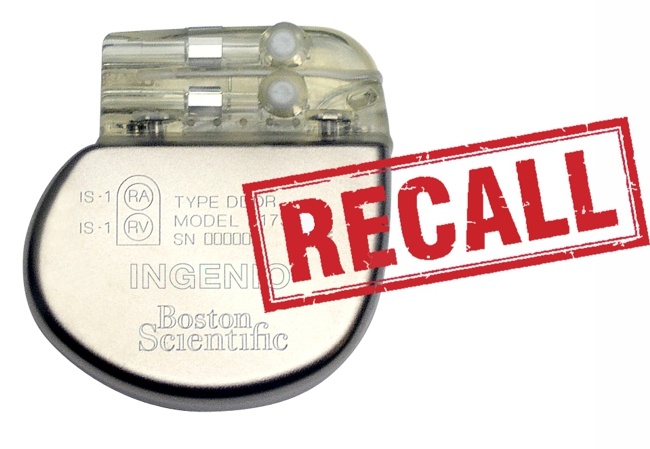
Boston Scientific has recalled approximately 48,000 Ingenio pacemakers and cardiac resynchronization devices distributed between November 2011 and August 2020. The potentially defective devices, which were manufactured only through December 2018, are no longer available for implant. The recall was initiated on June 3, 2021, and now FDA has identified this as a Class I recall, the most serious type of recall. Use of these devices may cause serious injuries or death.
There have been 65 reported incidents, including three injuries which required patients to receive temporary external pacing. There have been no reports of death.
The issue is that after several years of use, the batteries reach a high level of internal impedance. At that point, a sudden decrease in battery voltage may occur during telemetry, incorrectly triggering a system reset. If the system resets three times within 48 hours, it’s sent into safety mode. However, in safety mode, there is a risk of inappropriate loss of pacing due to sensing of muscle contractions. If the device goes into safety mode, the device cannot be reprogrammed and must be replaced.
According to FDA, the use of affected product may cause serious adverse health consequences, including early device replacement, loss of pacing or ability to regulate heart rate with serious or life threatening injury (for example, need of temporary pacing where a healthcare provider delivers controlled electric pulses to pace a heart), worsening of heart failure and death.

In October 2016, St. Jude Medical (now Abbott) issued an advisory on a family of ICD and CRT-D devices that may develop Lithium deposits within the battery leading to a short circuit and result in premature and potentially rapid battery depletion. However, according to the DOJ, St. Jude was already aware of the issue by 2013. In 2014 St Jude asked the FDA to approve an update to the devices to mitigate the battery issue. In its request, St. Jude claimed that the issue had not caused any serious injuries or deaths, but the DOJ claimed that the company had been informed of two injuries and one death caused by the issue.
The lawsuit covers the period between November 2014 and October 2016, during which the DOJ claims St. Jude was fully aware of the device’s issues but continued selling thousands of devices. By August 2016, St. Jude reported to FDA two more deaths linked to this issue, and over 700 cases of premature battery depletion.
The federal case was brought under the False Claims Act based on the allegation that by continuing to sell the potentially harmful products to healthcare facilities and implanted in patients enrolled in Medicare and Medicaid, St. Jude played a role in securing government payments for devices that they knew were defective. It was announced on July 8, 2021 that St. Jude Medical agreed to pay $27 million to settle this case.
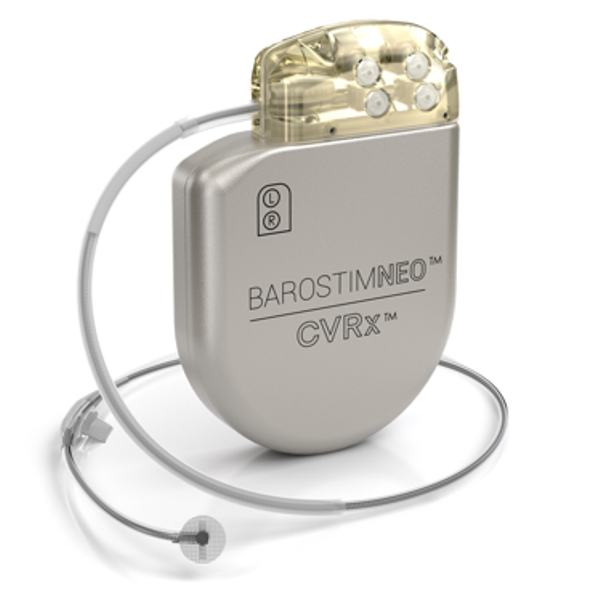
Image Credit: CVRx
Back in August of 2019, Minneapolis-based CVRx received a no-panel FDA approval for its BAROSTIM NEO™ device to treat Heart Failure. CVRx has now filed documents with the SEC with plans to offer 6.25 million shares of common stock priced between $15 and $17 per share, expecting to yield approximately $91.5 million in the offering.
The BAROSTIM NEO™ implantable pulse generator is implanted below the collar bone and is connected to a lead that attaches to the carotid artery in the neck, targeting its baroreceptors. The proposed mechanism of action is that the activation of baroreceptors cause the brain to relax the blood vessels and inhibit the production of stress-related hormones to reduce heart failure symptoms.
CVRx’s system is indicated for the improvement of symptoms in patients with advanced heart failure (EF≤35%) who are not suited for treatment with other heart failure devices.
CVRx website: www.cvrx.com
UPDATE: June 30, 2021, 2:49 pm
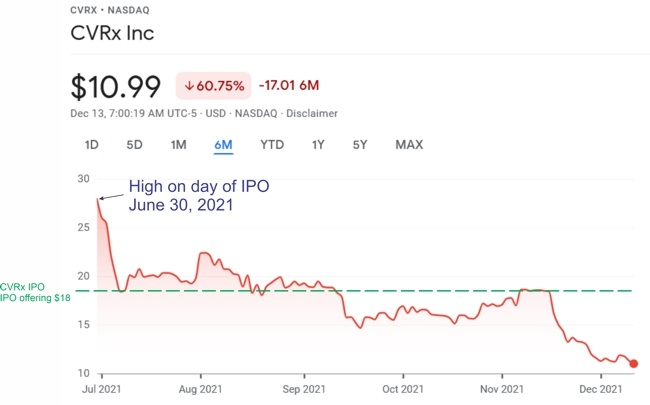
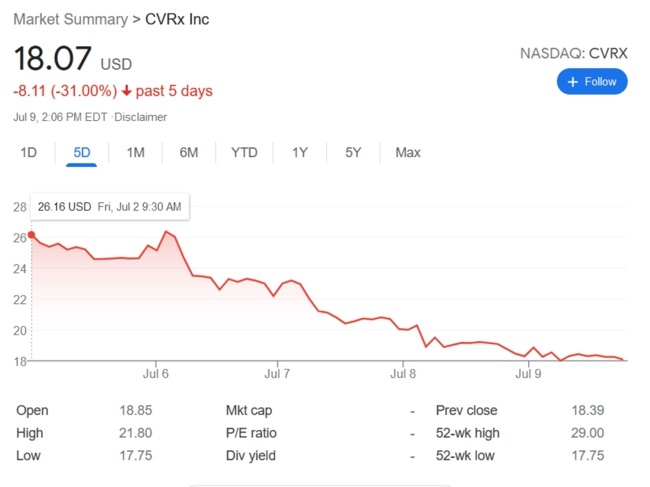
Yesterday CVRx upsized its IPO of 7M shares of its common stock at a public offering price of $18 per share. Trading started today and share price was $27 mid-afternoon.
UPDATE: July 9, 2021, 2:09 pm
A week after IPO CVRx’s stock has lost all of its initial gains. It is now trading around the original offering price of $18.
Update December 13, 2021
And CVRx stock keeps on tanking…