The Cleveland FES Center was established in 1991 as a consortium between the Cleveland VA Medical Center (CVAMC), the private educational institution of Case Western Reserve University (CWRU), and the public hospital system of MetroHealth Medical Center (MHMC).
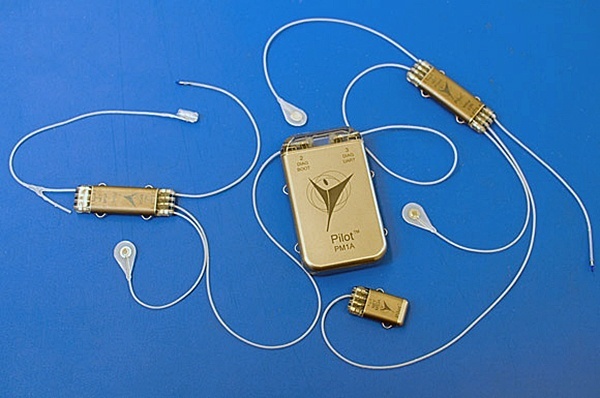
As part of this consortium, Dr. Hunter Peckham – biomedical engineering professor at Case Western Reserve University – and his group have developed the Networked Neuroprosthetic System (NNPS), which is based on a network of small implanted modules they call “neuroprosthetic building blocks”. These modules are distributed throughout the body, and each is dedicated to a specific function. Modules are linked to a centralized power source via a network cable through which they also communicate with each other.

 Start-up company
 Boston Scientific announced that it has launched a clinical trial to determine whether occipital nerve stimulation (ONS) using the Precision™ System can safely and effectively treat chronic migraine when used in conjunction with anti-migraine medications. According to the press release:
 This month’s Medical Device and Diagnostic Industry (MD+DI) magazine carried an interesting article by David Schatz – WiTricity’s VP Sales – on their efforts to develop highly resonant wireless power transfer technology for use in AIMDs. The article is available online at
 Greatbatch Medical, which moved its headquarters to the Dallas, TX area last year, announced that it has set a target of at least 5%/yr organic growth. To accomplish this growth, the Company recently
  On June 5, 2013 Greatbatch, Inc. announced that it would combine Greatbatch Medical and Electrochem Solutions – which have been operating independent operations and sales & marketing groups – into singular sales & marketing and operations groups serving the entire Greatbatch organization. According to the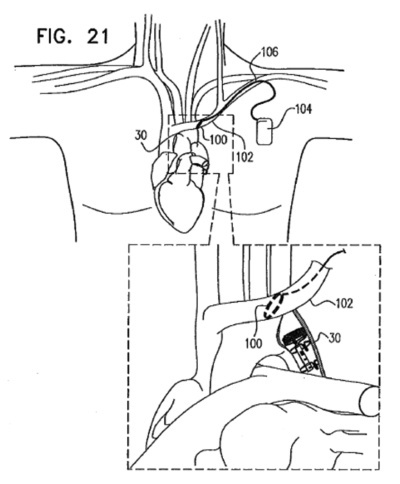
 NeuroTronik, a recent spin-off from Synecor, a Chapel Hill business accelerator, announced that it has raised $13.1M for the development of a neuromodulation system intended for the treatment of acute heart failure syndrome.