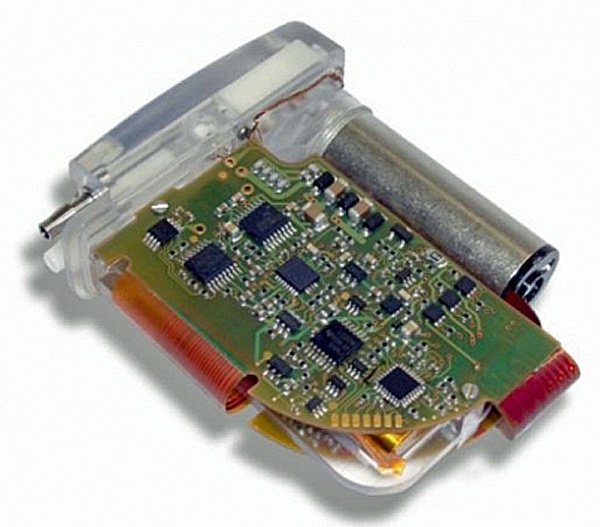
Swiss medical device manufacturer Sequana Medical developed the ALFApump® System to pump fluids accummulated in the abdomen of a patient into the bladder.
Implantable Devices to treat specific conditions
Swiss medical device manufacturer Sequana Medical developed the ALFApump® System to pump fluids accummulated in the abdomen of a patient into the bladder.
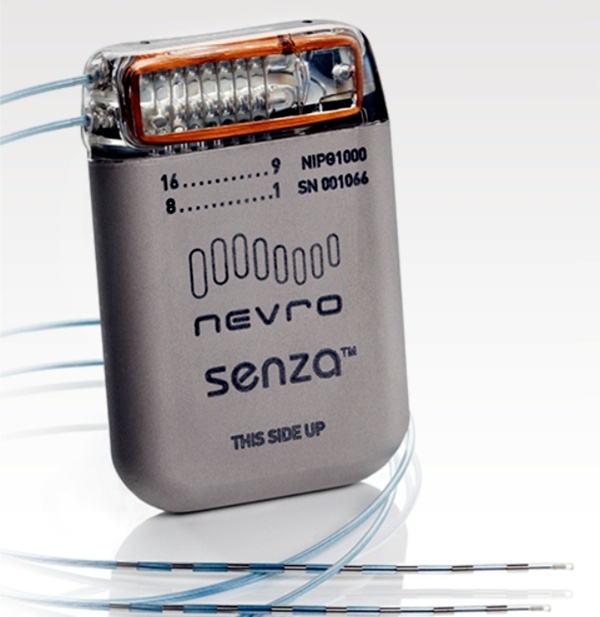
Image Source: Nevro's Website
Nevro Corp announced that FDA has granted approval for initiation of its SENZA-RCT study, a U.S. prospective, randomized, controlled pivotal clinical trial evaluating the safety and efficacy of Nevro’s high-frequency spinal cord stimulation system for the treatment of chronic pain.

Image Credit: St. Jude Medical
St. Jude Medical today announced FDA approval of its Assura™ portfolio of implantable cardioverter defibrillators (ICDs) and cardiac resynchronization therapy defibrillators (CRT-Ds).The new implantable defibrillators feature SecureSense™ RV Lead Noise Discrimination, an algorithm that expands the St. Jude Medical ShockGuard® Technology and offers advanced sensing options designed to reduce the incidence of inappropriate shocks for patients with these devices.
According to St. Jude’s announcement:
 Today EnteroMedics recorded revenue for the first time since it was incorporated nearly eight years ago. The company reported revenue of about $123,000 in the first quarter of the year from the sale of its Maestro RC implantable vagus nerve stimulation system for treating obesity. Revenue was generated through sales by its distribution partner in Australia.
This is an important step for an implantable device company that faced very tough times in 2009 after its US clinical trial failed to meet a critical effectiveness goal. EnteroMedics is currently conducting a pivotal trial that is expected to end in Q4 2012. EnteroMedics expects to file a premarket approval application with the FDA in the first half of 2013 if the data from the trial is positive.

Image Credit: St. Jude Medical
Today St. Jude announced the first implant in its Accent MRI(R) Pacemaker and Tendril MRI(R) Lead IDE Study (MRI Study). The ultimate goal of the study is to determine if patients with these devices can safely undergo full-body, high resolution Magnetic Resonance Imaging (MRI) scans to better accommodate their medical needs. The investigational Accent MRI Pacemaker system from St. Jude Medical offers an advanced pacing platform that provides wireless telemetry and algorithms to help address individual patient conditions.
 In response to my post “A Challenge to History Buffs: Who Was Digikon?“, Paolo Pagani sent me the following message:
“Digikon was in the years 1977-1985 the brand name product in Italy by Biotec Biomedical Technologies of Bologna – ITALY.
Pacemakers were a Digikon O.E.M. production for the trading company of Milan Italy KONTRON already a distributor in Italy of Medtronic.
Biotec developed the first pacemaker VVIR based on physiological changes in thoracic impedance due to respiration. (Biotec RDP-3)
Biotec-Bologna was acquired by Medtronic in August 1985.”
Thank you Paolo!
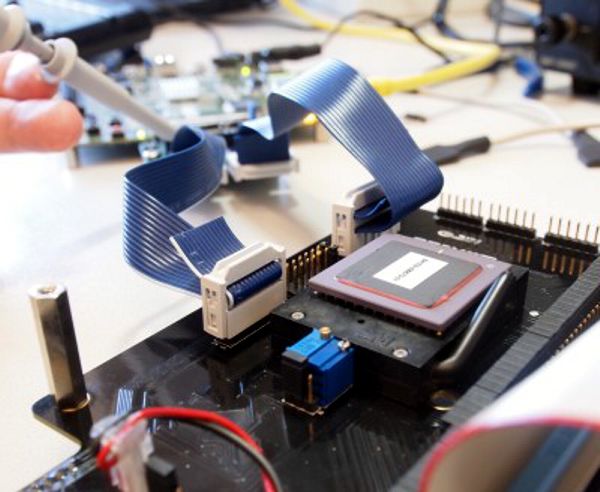
Image Credit: Monash Vision Group, Monash University, Australia
Engineers from the Monash Vision Group (MVG) have begun trialling the ASICs for a direct-to-brain visual prosthesis that is expected to enter human clinical trials in 2014.
The prosthesis will consist of a tiny camera mounted into a pair of glasses, which acts as the retina; a pocket processor, which takes the electronic information from the camera and converts it into signals enabling the brain to build up a visual construct; and cortical implants of several tiles which will be the portal for the stimulation of the visual cortex. Continue reading
 Johns Hopkins’ Sridevi V. Sarma, an assistant professor of biomedical engineering, has devised new seizure detection software that, in early testing, significantly cuts the number of unneeded brain-stimulation therapy that an epilepsy patient would receive.
According to Sarma, “These devices use algorithms—a series of mathematical steps—to figure out when to administer the treatment,” Sarma said. “They’re very good at detecting when a seizure is about to happen, but they also produce lots of false positives, sometimes hundreds in one day. If you introduce electric current to the brain too often, we don’t know what the health impacts might be. Also, too many false alarms can shorten the life of the battery that powers the device, which must be replaced surgically.” Continue reading

Image Credit: St. Jude Medical
St. Jude announced it is proactively informing physicians about visual observations of externalized conductors on the silicone end of QuickSite® and QuickFlex® Left-Ventricular Leads, used to connect Cardiac Resynchronization Therapy devices to the heart.
The announcement noted that there have been no reports of patient injury or loss of therapy due to externalized conductors in these leads, but as a conservative measure, St. Jude Medical is communicating with physicians about the incidence rate so they have the most updated lead performance information with which to make important patient care decisions.
According to the announcement, “St. Jude Medical has confirmed 39 cases of externalized conductors, out of 171,000 QuickSite and QuickFlex leads sold worldwide, resulting in a current reported incidence rate of 0.023 percent, or 2.3 in 10,000. Because these leads continue to function normally, the company expects that this rate is under-reported. Based on an analysis of leads returned to the company and recent fluoroscopic images of implanted leads still in clinical use, St. Jude Medical estimates that 3 to 4 percent of QuickSite and QuickFlex leads may exhibit externalized conductors. As a result of this estimated rate, the company felt it was prudent to communicate with physicians about the externalized conductors at this time.”
St. Jude also announced they will no longer sell these lead models.
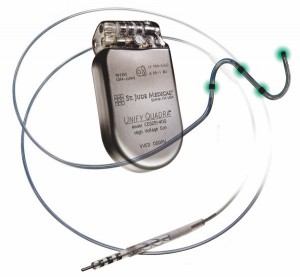
Image Credit: St. Jude Medical
St. Jude Medical announced that clinical findings on quadripolar pacing will be presented at the 61st Annual Scientific Sessions of the American College of Cardiology (ACC, Chicago, March 24-27 2012).
According to St. Jude’s announcement, quadripolar pacing allows physicians the ability to use multisite left-ventricular (LV) pacing. Studies that examined the role of multisite pacing in improving hemodynamics and reducing dyssynchrony as compared to traditional bi-ventricular pacing will be presented in the following two posters:
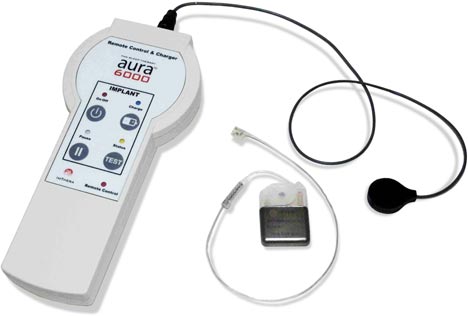
Image Credit: Imthera
ImThera Medical announced this week that it received the CE Mark for the Aura6000 System to Treat Obstructive Sleep Apnea. Continue reading
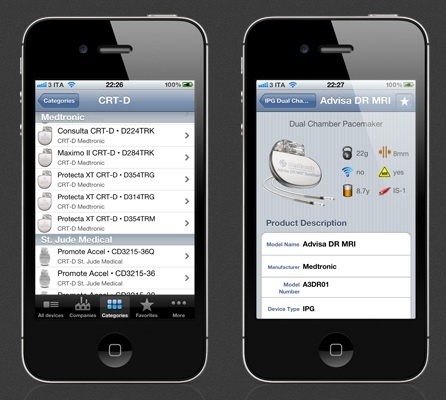
Image Credit: iPacemaker
My friend and colleague Dr. Irit Yaniv alerted me to this iPhone app that was just released. It is an implantable pacemaker and defibrillator database that, according to its author, displays up to 70 parameters for each model, includes battery and longevity data, and links directly to product manuals. Continue reading
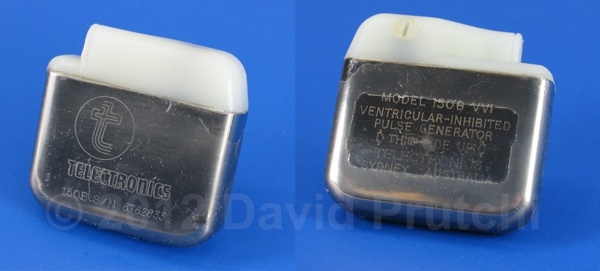 In 1965, Australian medical device pioneer Noel Gray established Telectronics – Australia’s first manufacturing facility for producing pacemakers that were designed in-house. Telectronics was an innovative developer, achieving some major successes in the early cardiac pacing field, for example, Telectronics’ leads allowed narrowing the pacing pulse to its current nominal of 0.5 milliseconds; encapsulating the pacemaker in titanium instead of epoxy; using a microplasma weld to join the two halves of the pacemaker capsule; creating one of the first rate-responsive ‘demand’ pacemakers; and isolating the pacemaker’s battery in a separate compartment to deal with the problem of leaking mercury-zinc batteries. Continue reading

Image Credit: St. Jude Medical
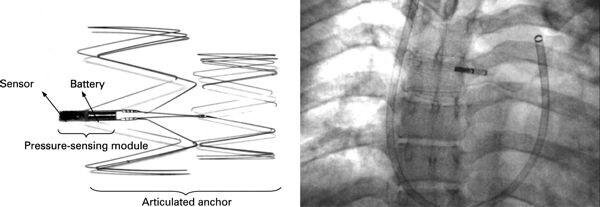
Remon Medical Technologies, Ltd. was founded in 1997 in Caesarea, Israel to develop implantable, wireless pressure sensors.
Remon developed an implantable hemodynamic monitor, which allowed on-demand, non-invasive, leadless self-monitoring of pulmonary artery pressure by the patient at home. ImPressure devices were placed in the pulmonary artery, and transmitted pressure readings to a hand-held monitor. It was hoped that the system would provide early warning of the need for treatment, avoiding hospitalization and deterioration in the patient’s condition. Continue reading