Image Credit: St. Jude Medical
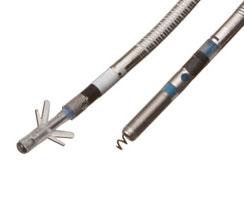
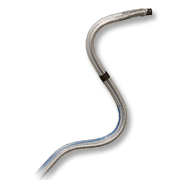
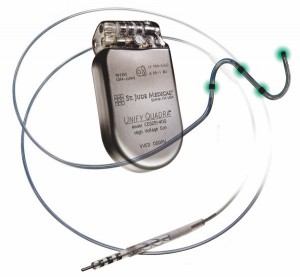
St. Jude announced it is proactively informing physicians about visual observations of externalized conductors on the silicone end of QuickSite® and QuickFlex® Left-Ventricular Leads, used to connect Cardiac Resynchronization Therapy devices to the heart.
The announcement noted that there have been no reports of patient injury or loss of therapy due to externalized conductors in these leads, but as a conservative measure, St. Jude Medical is communicating with physicians about the incidence rate so they have the most updated lead performance information with which to make important patient care decisions.
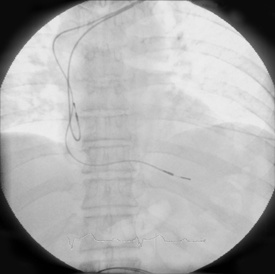
According to the announcement, “St. Jude Medical has confirmed 39 cases of externalized conductors, out of 171,000 QuickSite and QuickFlex leads sold worldwide, resulting in a current reported incidence rate of 0.023 percent, or 2.3 in 10,000. Because these leads continue to function normally, the company expects that this rate is under-reported. Based on an analysis of leads returned to the company and recent fluoroscopic images of implanted leads still in clinical use, St. Jude Medical estimates that 3 to 4 percent of QuickSite and QuickFlex leads may exhibit externalized conductors. As a result of this estimated rate, the company felt it was prudent to communicate with physicians about the externalized conductors at this time.”
St. Jude also announced they will no longer sell these lead models.


In 1965, Australian medical device pioneer Noel Gray established Telectronics – Australia’s first manufacturing facility for producing pacemakers that were designed in-house. Telectronics was an innovative developer, achieving some major successes in the early cardiac pacing field, for example, Telectronics’ leads allowed narrowing the pacing pulse to its current nominal of 0.5 milliseconds; encapsulating the pacemaker in titanium instead of epoxy; using a microplasma weld to join the two halves of the pacemaker capsule; creating one of the first rate-responsive ‘demand’ pacemakers; and isolating the pacemaker’s battery in a separate compartment to deal with the problem of leaking mercury-zinc batteries. 


Sensors for Medicine and Science, Inc. (SMSI) of Germantown, MD was founded in 1997 to develop chemical sensing technologies based on fluorescence sensing.