Nyxoah was founded in 2009 by Robert Taub and Dr. Adi Mashiach to develop neurostimulation treatments focused for Obstructive Sleep Apnea.
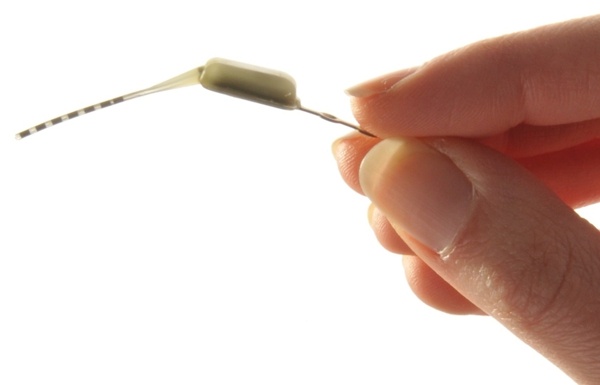
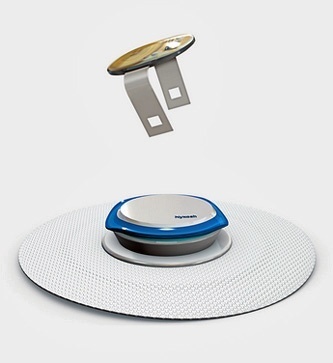
Nyxoah is currently engaged in clinical tests of a tiny, battery-less implantable neurostimulator that can electrically control the nerves of the tongue and so prevent airway blockage.
According to Nyxoah, the implantable device is 20mm high and 2.5mm wide (although it looks more like 20mm diameter x 2.5mm thick to me…). It’s designed to be implanted close to the nerves of the tongue muscle by a single small incision in a procedure that reportedly takes only 15 minutes.
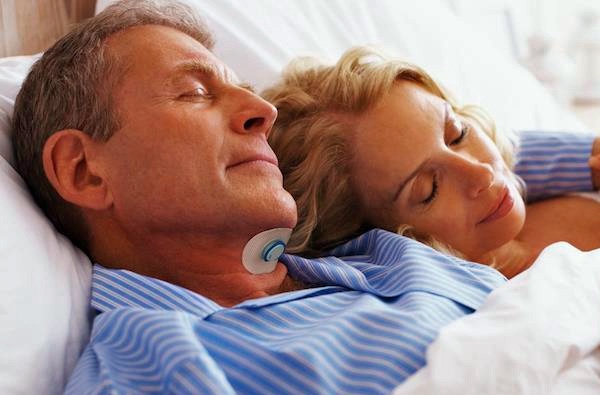
The implant is powered and controlled by a disposable external adhesive patch. Every evening the OSA sufferer uses a new disposable patch that has been powered by the charger. The patch, measuring only 55 x 90 mm, is attached to the skin under the chin and has enough power to wirelessly activate the implant for a full night sleep session.

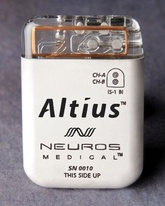 Neuros Medical received an Investigational Device Exemption to conduct a pivotal clinical trial to evaluate the Altius™ System High Frequency Nerve Block technology for the management of intractable limb pain of amputees. The prospective, randomized, controlled pivotal clinical trial will consist of 130 patients at 15 institutions in the U.S. to evaluate the safety and efficacy of Neuros Medical’s Altius System.

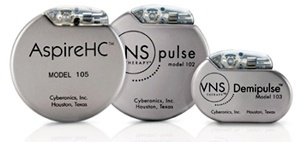 Net product sales increased 12.4% to $67.4 million in the first fiscal quarter ended July 26 for Cyberonics, Inc. of Houston, TX. Including license revenue, sales were up 14.2% overall, with Europe in particular contributing a strong performance. Diluted earnings per share were adjusted by $0.17 cents due to a litigation settlement.