
- Image Credit: SPR Therapeutics
NDI Medical was founded in 2002 by Geoffrey B. Thrope to develop and commercialize neurodevice products. NDI Medical developed the MicroPulse neurostimulator, a thumb-sized, rechargeable pulse generator, that has been used for the treatment of incontinence and pain, as well as an implantable device for the restoration of function of paralyzed limbs.
According to a 2006 news release by the electronics assembly manufacturer for the MicroPulse:
“Using minimally-invasive surgery, the Micropulse is implanted into a patient, usually in the lower abdomen or buttock, where the device is most comfortable and least visible. After implantation, a clinician uses a wireless programmer to set the Micropulse’s stimulus parameter and timing patterns. The programmer, as well as the patient’s controller for the device, has a range of about three feet.
To recharge the device’s lithium-ion battery, the patient applies a recharging patch for several hours to the vicinity of the implant. The battery needs recharging from once a month to every few weeks.” Continue reading
 Leptos Biomedical was founded in Fridley, MN in 2002 by Dr. John D. Dobak. Leptos intended to develop an implantable device to stimulate the greater splanchnic nerve, that was hoped would result in reduced food intake and increased energy expenditure.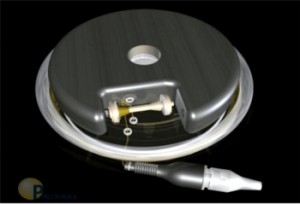

 We conduct reliability analyses for our implantable devices on a continued basis. I’ve spent the last few days readying the data for this period’s analysis, and thought that a short primer on how this is actually done would be of interest to fellow engineers who may need it at some point.
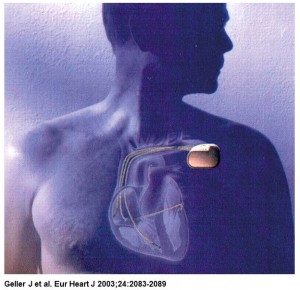 InControl was founded in 1990 in Redmond, WA to develop an implantable device for treating atrial fibrillation. In November 1995, InControl announced the first human implant of its Metrix atrioverter.


 It has been known for quite some time that bone growth is stimulated by DC electrical currents. However, only relatively recently implantable stimulators have been developed for the application.