
- Image Credit: Spinal Modulation
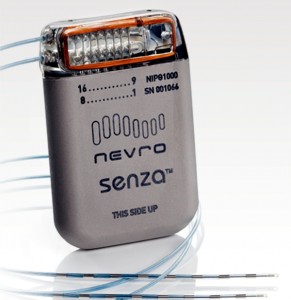
Spinal Modulation was founded by Mir Imran in Menlo Park, CA in 2004. The company has developed an implantable neurostimulator to deliver signals to the primary sensory neurons located within the dorsal root ganglion (DRG). The idea is that unlike dorsal column spinal cord stimulation, the Spinal Modulation system breaks the pain signal’s path before it enters the spinal cord. Continue reading

 It has been known for quite some time that bone growth is stimulated by DC electrical currents. However, only relatively recently implantable stimulators have been developed for the application.
 BioControl Medical, Ltd. was founded in 1999 by

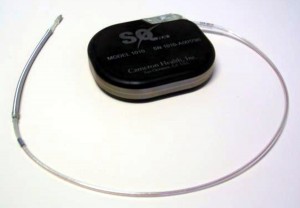 Cameron Health was founded in 2000 in San Clemente, CA to develop a leadless implantable defibrillator.