The First Workshop on Active Implantable Medical Devices took place at in Punta del Este, Uruguay last Friday (March 1st 2024) as part of the LASCAS 2024 meeting.
The First Workshop on Active Implantable Medical Devices took place at in Punta del Este, Uruguay last Friday (March 1st 2024) as part of the LASCAS 2024 meeting.
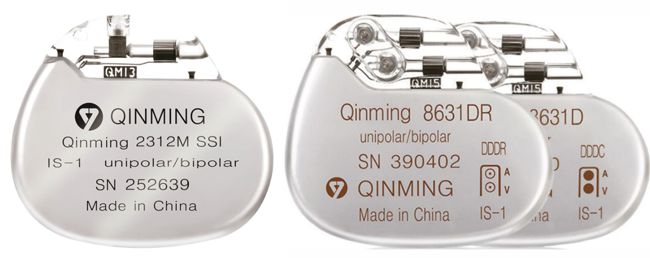
Image Credit: Qingming
Cardio-Pace Medical, Inc was incorporated in Delaware on April 20, 1981 to develop, manufacture, and market its proprietary Durapulse(TM) cardiac pacemaker and accessory products. Although Cardio-Pace achieved sales of its pacemakers, it did not achieve profitability. As a result, they suspended manufacturing the cardiac pacemaker in 1990. During 1985, Cardio-Pace entered into an agreement with Qinling Semiconductor to establish Qinming Medical, Inc., a Sino-American joint venture in Baoji, China, for the manufacture and distribution of cardiac pacemakers and accessory products. In 1992, Cardio-Pace sold its 49% interest in the joint venture to Qinming.
In 2010, Lepu Medical of Beijing purchased a 30.46 percent stake in Qinming as part of its efforts to forge an integrated Chinese cardiovascular products company. In 2013, Lepu completed the acquisition of Shaanxi Qinming Medical Instruments Co., Ltd.
Around that time, Qinming developed the QM7211, which was the first domestically developed dual-chamber rate-responsive pacemaker in China. Its clinical study to evaluate it for non-inferiority against a Biotronik Talos pacemaker was successfully completed in 2015.
Today, Qinming is Lepu’s subsidiary in charge of the development, manufacture, and marketing of pacemaker products. Their line includes single- and dual-chamber devices, as well as passive and active-fixation leads.
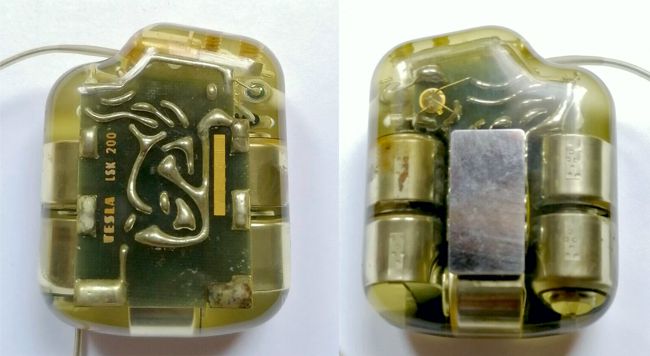
In the late 1960s and early 1970s, Czechoslovakia, like many other countries, had its own pacemaker development/manufacturing.
Starting in 1965, Dr. Bohumil Peleška and ing. Vladimír Bičík designed and manufactured a VOO pacemaker under the auspices of the “Research Institute for Medical Electronics and Modelling” (RIMEM). The device underwent human implantation and worked for 2 years before being preemptively replaced.
RIMEM’s pacemakers were then transferred for commercial production at the Czechoslovak TESLA state-owned electrotechnical conglomerate. TESLA was originally named after Nikola Tesla, but later explained by the Communist regime as an abbreviation from TEchnika SLAboproudá, which means “low-voltage technology.”
An interesting presentation about the history of pacemakers in the former Czechoslovakia is available here.

In December of 1995 FDA approved the Res-Q ACD. This was Intermedics’ first implantable defibrillator. The abdominal-implant device was a relatively late-comer, and large for the time (230 g), but it did offer the highest energy output (40 Joules). Another unique feature of the ResQ device was that it provided a connectorized sterile package which allowed complete pre-implant testing, thereby reducing the need for additional equipment.
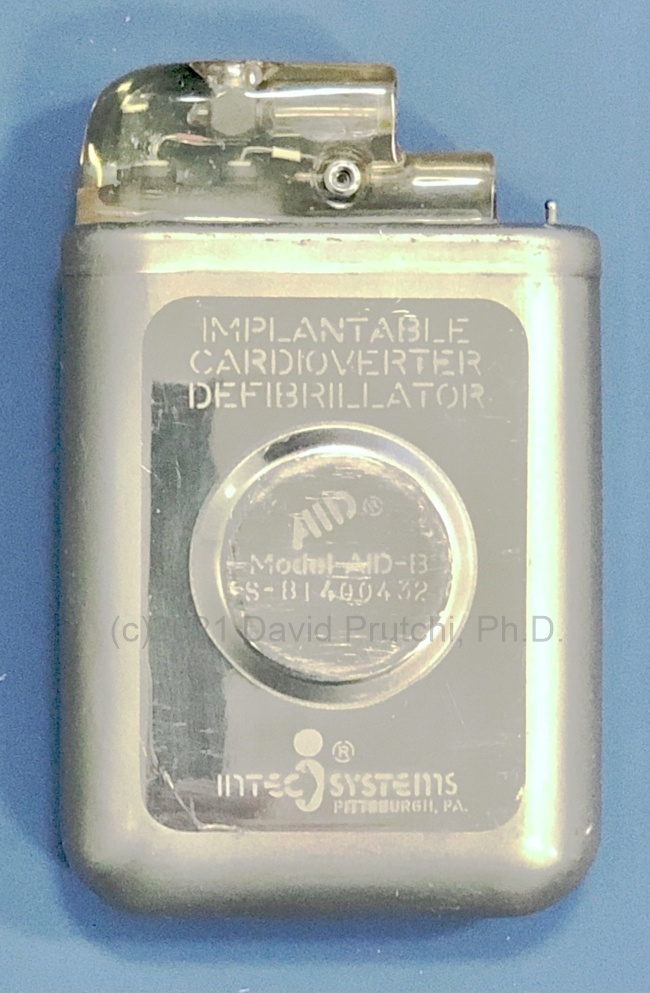
Intec AID-B. (c) 2021 David Prutchi, PhD.
Conceived by physicians Michel Mirowski and Morton Mower, and supported by Dr. Stephen Heilman, the first automatic implantable defibrillator was developed and manufactured under the name of “AID” by Medrad/Intec Systems in Pittsburgh, PA.
It was encased in titanium and hermetically sealed with a laser beam weld. It had a volume of 145 ml and weighed 250 gm. The device was powered by lithium batteries which had a projected monitoring life of 3 years or a discharge capability of 100 shocks.
The ICD was designed to detect ventricular fibrillation and sinusoidal ventricular tachycardia, and it attempted to using a truncated exponential 25 Joules pulse. The device could recycle three times during a single episode with the third and fourth pulses delivered at 30 Joules.
The device was meant to be connected to electrodes made from titanium and coated with silicone rubber. One defibrillating electrode was located intravascularly in the superior vena cava (SVC) at the right atrial junction. The second electrode had the configuration of a rectangular patch or a cup and was positioned over the cardiac apex.
First implants of the device were conducted at the Johns Hopkins Hospital in Baltimore in 1980. These devices were not programmable and manufactured on an individual basis. The AID was then improved with rate-counting circuitry and could synchronize shocks with the R-wave. Efforts were also made to reduce the recycling time after a failed shock. The new device was called the AID-B (shown in the picture), but was still manufactured according to individual specifications.
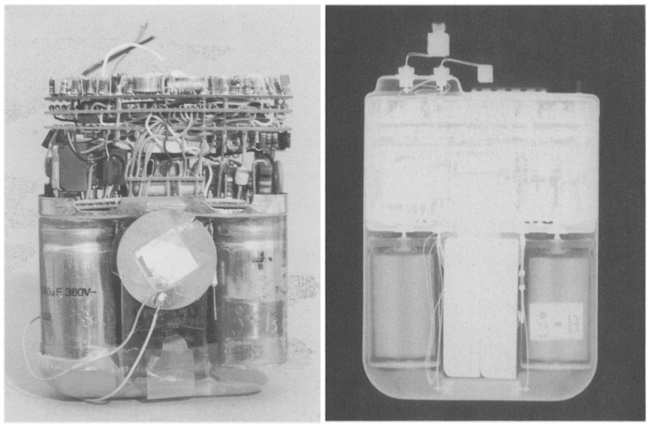
Circuitry of the AID-B implantable defibrillator. From: PJ Troup, “Implantable Cardioverters and Defibrillators”, Current Problems in Cardiology, Volume 14, Issue 12, December 1989.
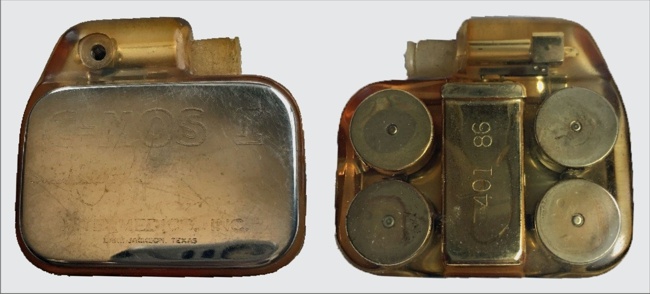
Intermedics C-MOS-I Pacemaker. Image credit: Michael Sklanowsky
In 1973, former Medtronic sales representative Albert Beutel founded Intermedics in Freeport, TX. The company’s first product was the C-MOS-I implantable pulse generator – a small (for the time), mercury-cell-powered pacemaker.
Mike Sklanowsky shared pictures of a C-MOS-I sample that he owns. Mike was a software consultant to Intermedics in Freeport around 1974, where he developed the first computerized pacemaker tracking and product recall software. Through his software, Intermedics tracked pacemaker locations and movement through distribution warehouse shelves, hospitals, clinics, doctors, nurses, patient notification of expiring battery charge, product recall communications, follow-ups, etc.
Before Intermedics, Mike worked for JPL, which was his first full-time job upon graduating from UCLA. At JPL he worked on problems related to celestial mechanics, spacecraft orbit determination, trajectory analysis, instrument operations, and human interfaces for real-time command and control. His first project was Mariner 9 Mars, which became the first man-made satellite to orbit another planet.
Mike, and fellow UCLA graduate Bob Patterson were the only two people from their class to get hired by JPL. Bob’s mentor, Prof. Ken Nobe involved both with Intermedics. Dr. Robert (Bob) Patterson was an expert in long-life lithium battery technology for space exploration, and his work for Intermedics led to the 1974 development of a lithium-powered version of C-MOS-I, followed in 1976 by InterLith which was hermetically sealed, and weighed just 65 grams.
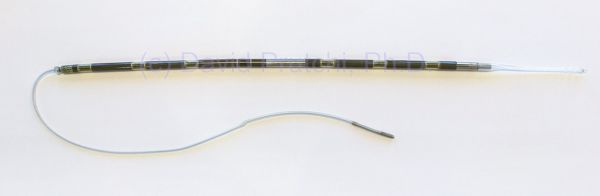
InnerPulse was founded in Raleigh, North Carolina, in 2003 to develop an intravascular defibrillator placed completely within the vasculature.
The idea was that unlike typical CRM devices, the InnerPulse fully intravascular defibrillator (PICD™) technology would be implanted percutaneously utilizing a catheter-based procedure. Additionally, the implant procedure would be familiar to both electrophysiologists (who currently implant the majority of CRM devices) and other implanting cardiologists, and was thought to have significantly lower infection rates than surgical procedures. The intravascular device was also touted by InnerPulse as having potential reliability advantages, including the virtual elimination of performance issues associated with cardiac leads and device headers. In addition, because the IID does not require a surgical pocket, patients would benefit through lower post-procedure discomfort and improved cosmesis. In the end, the device would be imperceptible to the patient and will address known barriers to patient acceptance of an implanted device.
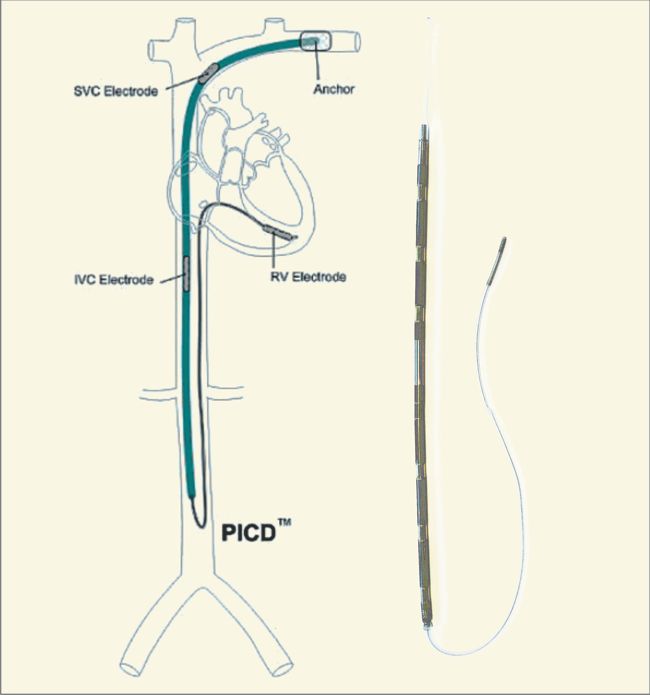
By 2008, backed with $85M by Industry giants such as Johnson & Johnson Development Corporation, Medtronic, Inc., Synergy Life Science Partners, Ascent Biomedical Ventures, Delphi Ventures, Frazier Heathcare Ventures, Boston Scientific, and Greatbatch, Inc. InnerPulse had developed an intravascular, percutaneously placed implantable defibrillator (InnerPulse percutaneous intravascular cardioverter-defibrillator [PICD]) with a right ventricular (RV) single-coil lead and titanium electrodes in the superior vena cava (SVC) and the inferior vena cava (IVC).
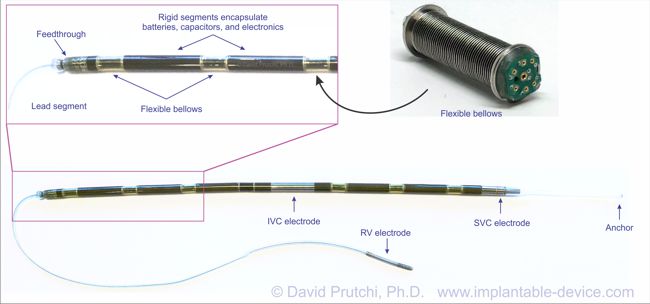
The device itself was a masterpiece of engineering, featuring a completely hermetical but flexible enclosure. The flexible interfaces between the cylindrical segments was provided by titanium bellows with internal flexible wiring. The batteries and defibrillation capacitors were custom-made for this device. Circuitry was all laid-out in flexible boards that would be folded to accommodate the cylindrical geometry.
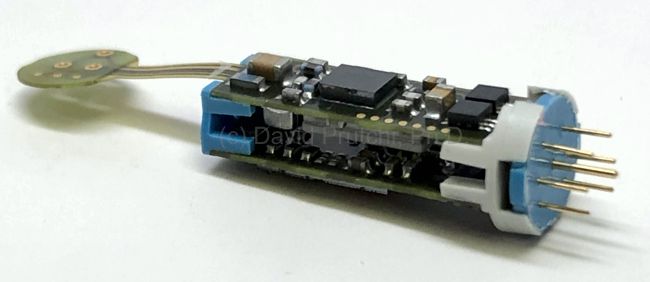
Control Module for the InnerPulse PicD
The PICD’s control circuit was powered by a CFx battery, while energy for defibrillation was produced by a stack of two SVO cells.
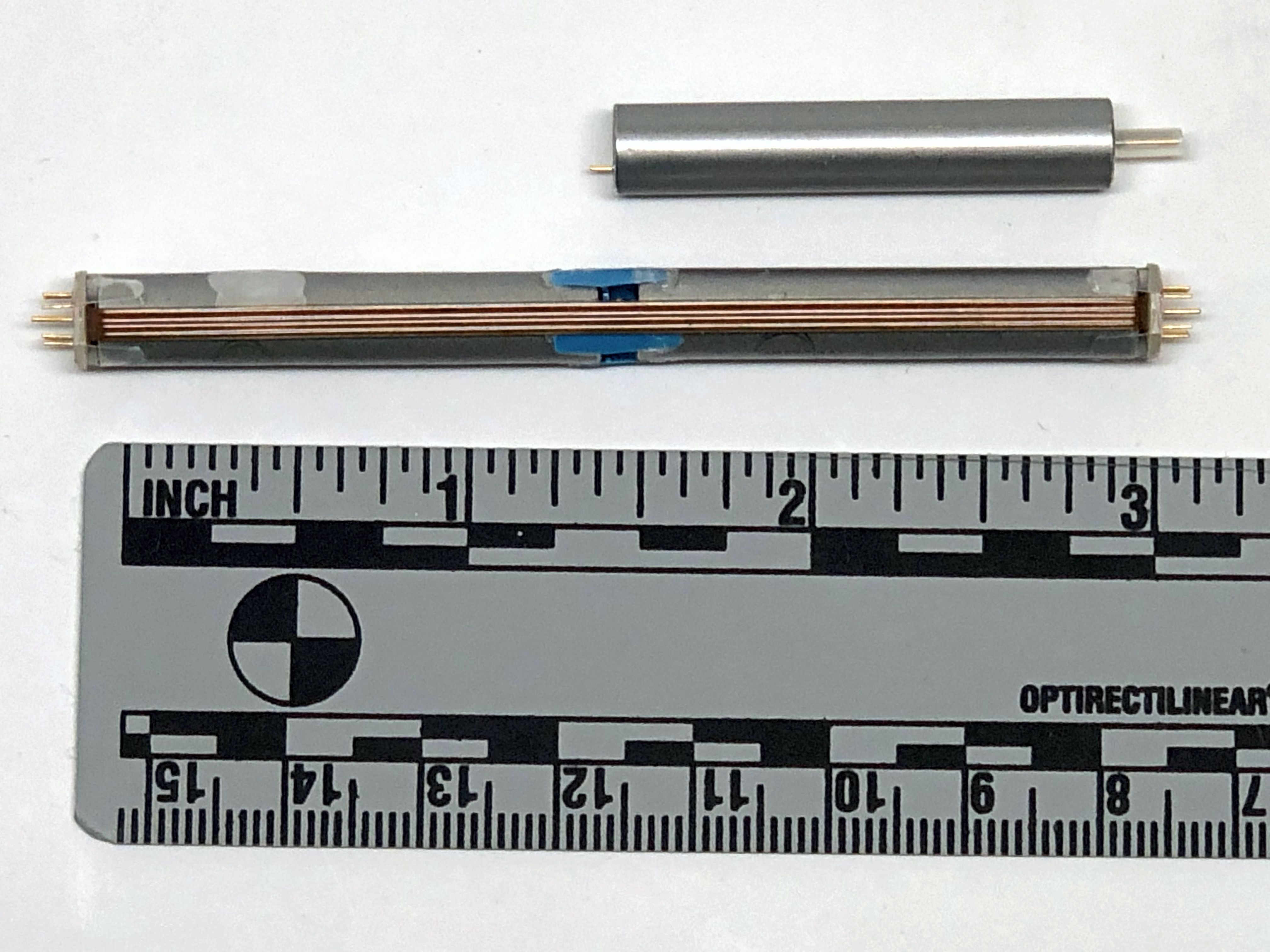
SVO Cell Stack for the InnerPulse PICD
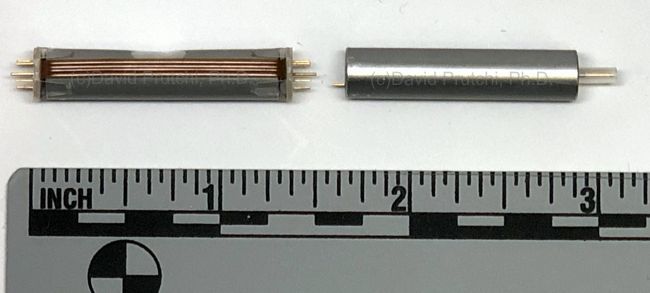
CFx battery used to power the PICD’s Control Circuitry
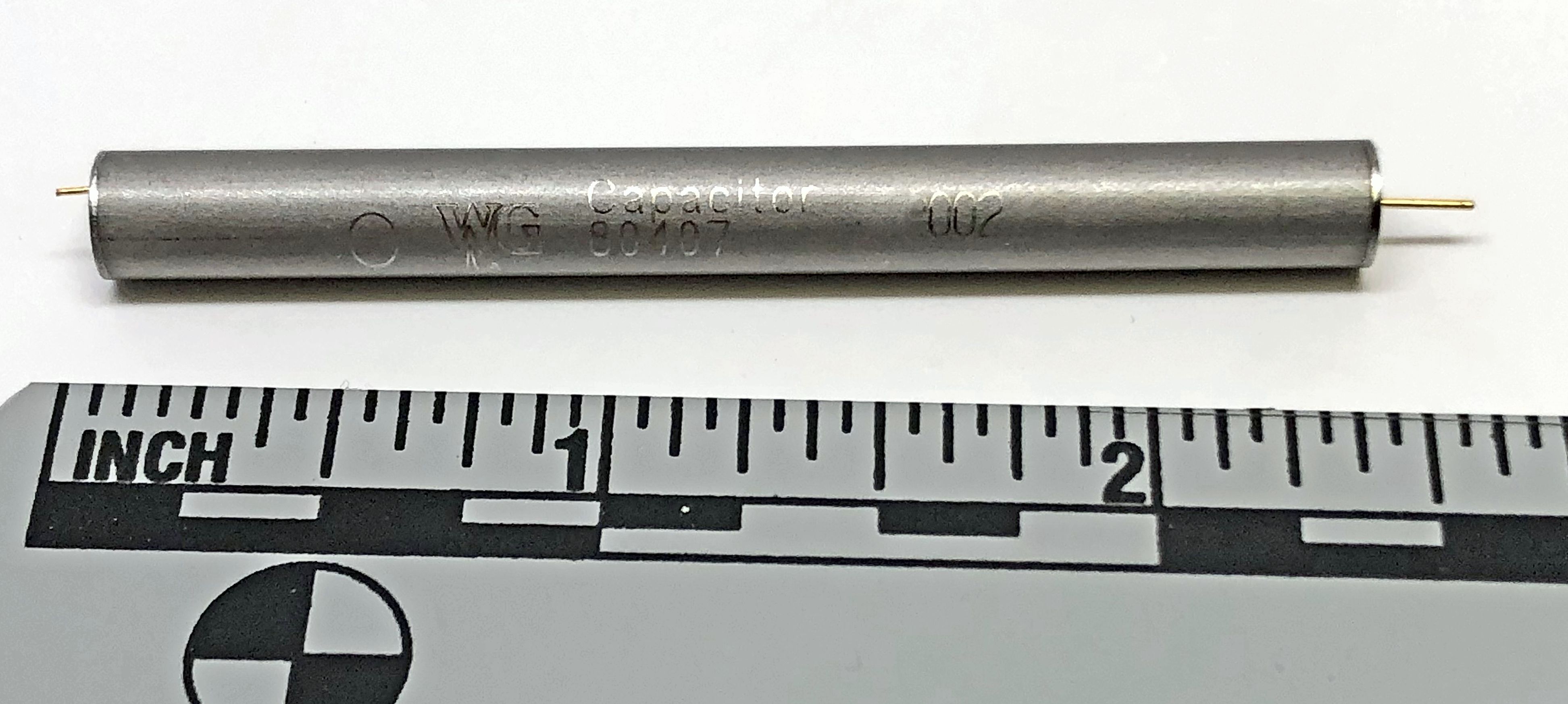
HV Capacitor for the InnerPulse PICD
Tests in human subjects showed similar defibrillation thresholds compared to a standard ICD. In a 10-subject study, PICD DFT was 7.6 ± 3.3 J, and the conventional ICD system demonstrated a mean DFT of 9.5 ± 4.7 J (N = 10; paired t test, P = .28). Unfortunately however, a chronic animal study revealed problems of lead dislodgement, loss of capture, and perforation.
Ultimately, Boston Scientific decided to acquire Cameron’s Subcutaneous ICD (S-ICD) and stopped backing InnerPulse. InnerPulse was dissolved after it had no money left for resolving the technical issues and conducting chronic human clinical trials.
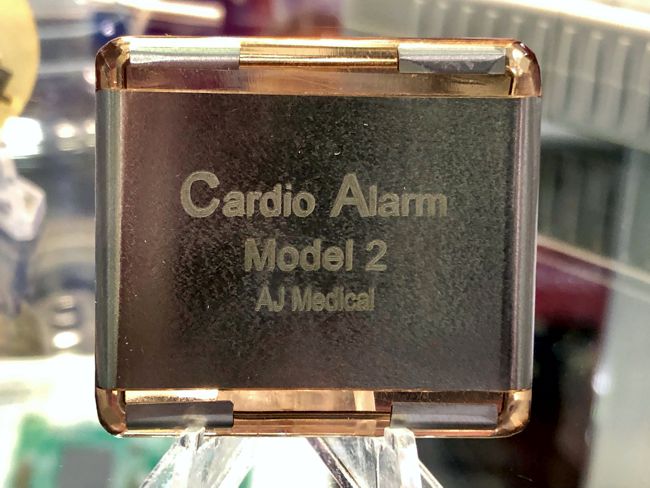
Walking through MD&M is always fun because component and assembly companies often display implantable devices that never made it to market or technologies that they are incorporating into brand new devices that have not yet reached prime time.
AJ Medical’s CardioAlarm is a sample of an implantable device that didn’t quite made it. It was meant to automatically detect cardiac arrest and use a wirelessly-connected pager-like device to alert bystanders and call 911.
As many other alert implantable medical devices, CardioAlarm didn’t make it to market. The latest victim being Angel Medical needing to seek Chapter 11 bankruptcy protection soon after achieving FDA approval for its Guardian Implantable Heart Attack Monitor, although hopefully this is just a financial restructuring exercise to gear up for full commercialization of the device.

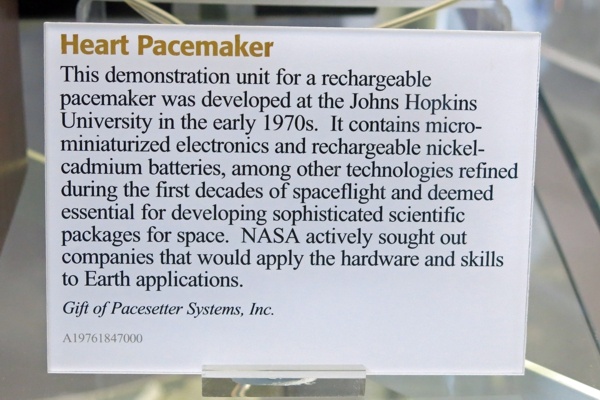
Yesterday I visited the Udvar-Hazy Center of the Smithsonian Air & Space Museum in Chantilly, VA. There I found this demo rechargeable pacemaker being displayed as a spinoff of NASA’s technology with the following explanation:
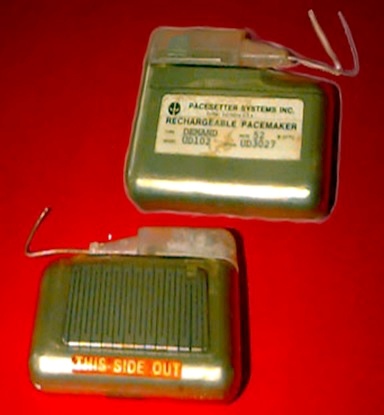 I can’t remember exactly where I found the picture of a Pacesetter model BD102 VVI, but the story behind it is documented by Kirk Jeffrey in “Machines in our Hearts”:
“In 1968, Robert Fischell, of the Applied Physics LOaboratory at Johns Hopkins University, and cardiologist Kenneth B. Lewis had begun a collaboration that led in 1973 to a new kind of Ni-Cad battery able to function more effectively at body temperature and hermetically sealable. Alfred E. Mann, a California entrepreneur with background in the aerospace industry, had provided some financial support to the Hopkins group. Eventually Mann founded a small company to develop a pacemaker for the rechargeable battery; this was the origin of Pacesetter Systems. The rechargeable pacemaker reached the market in the summer of 1973, just as CPI introduced its lithium pacer.”

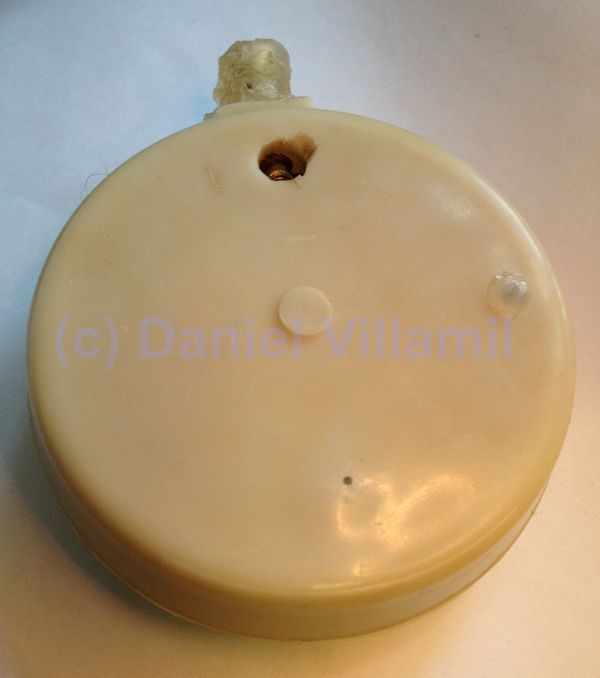
My friend Daniel Villamil from CCC Medical in Uruguay sent me these pictures of a very unique device in his colection. It is a late-1960s/early 1970s pacemaker made in Sao Paulo, Brasil.
UPDATE Oct 3, 2012:
CCC’s CEO Julio Arzuaga recalled that this pacemaker was manufactured in the early 1960s by the Instituto de Cardiologia Dante Pazzanese in Sao Paulo, Brasil. The physicians leading the pacemaker team were Dr. Decio Kormann and Dr. Adib Jatene.
Dr. Orestes Fiandra used to implant these Brasilian pacemakers in Uruguay. However, they were not very reliable. For this reason, and with help from Drs. Kormann and Jatene, Dr. Fiandra started CCC del Uruguay as a more industrial environment for the production of pacemakers.
 In response to my post “A Challenge to History Buffs: Who Was Digikon?“, Paolo Pagani sent me the following message:
“Digikon was in the years 1977-1985 the brand name product in Italy by Biotec Biomedical Technologies of Bologna – ITALY.
Pacemakers were a Digikon O.E.M. production for the trading company of Milan Italy KONTRON already a distributor in Italy of Medtronic.
Biotec developed the first pacemaker VVIR based on physiological changes in thoracic impedance due to respiration. (Biotec RDP-3)
Biotec-Bologna was acquired by Medtronic in August 1985.”
Thank you Paolo!
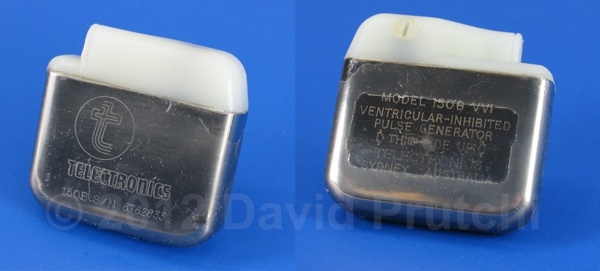 In 1965, Australian medical device pioneer Noel Gray established Telectronics – Australia’s first manufacturing facility for producing pacemakers that were designed in-house. Telectronics was an innovative developer, achieving some major successes in the early cardiac pacing field, for example, Telectronics’ leads allowed narrowing the pacing pulse to its current nominal of 0.5 milliseconds; encapsulating the pacemaker in titanium instead of epoxy; using a microplasma weld to join the two halves of the pacemaker capsule; creating one of the first rate-responsive ‘demand’ pacemakers; and isolating the pacemaker’s battery in a separate compartment to deal with the problem of leaking mercury-zinc batteries. Continue reading
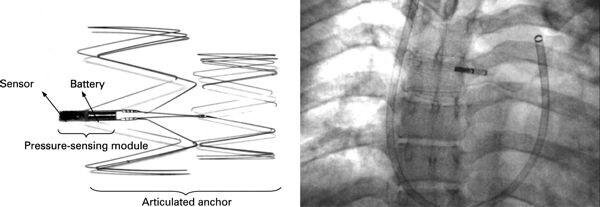
Remon Medical Technologies, Ltd. was founded in 1997 in Caesarea, Israel to develop implantable, wireless pressure sensors.
Remon developed an implantable hemodynamic monitor, which allowed on-demand, non-invasive, leadless self-monitoring of pulmonary artery pressure by the patient at home. ImPressure devices were placed in the pulmonary artery, and transmitted pressure readings to a hand-held monitor. It was hoped that the system would provide early warning of the need for treatment, avoiding hospitalization and deterioration in the patient’s condition. Continue reading
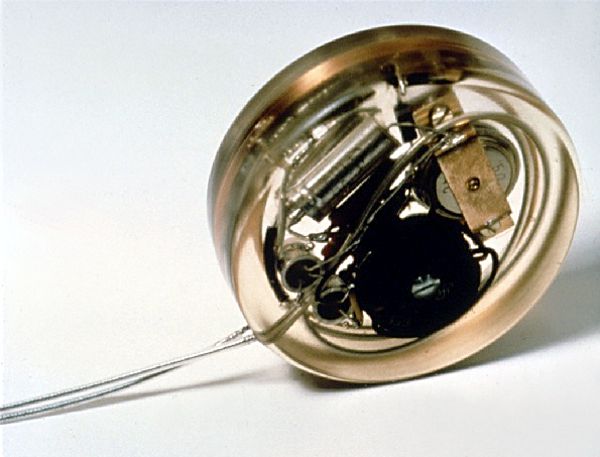
This is a picture of the first pacemaker to be implanted in a human patient. It was developed by Dr. Rune Elmqvist (1906–1996), a physician by training, but working for the Swedish company Elema-Schonander as an engineer. Dr. Elmqvist developed the device in cooperation of Åke Senning, senior physician and cardiac surgeon at the Karolinska University Hospital in Solna, Sweden. Continue reading
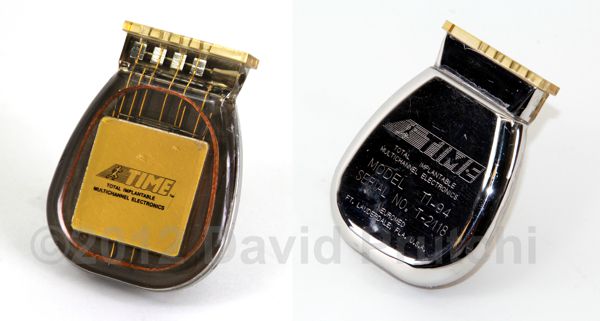
Neuromed TIME IPG on loan from Daniel Villamil's collection.
Neuromed was formed in 1980 with an initial capitalization of $150,000 by Bill Borkan through money obtained when Borkan`s parents took out a second mortgage on their home. Borkan’s desire to help his sister, Jennie, a cerebral palsy patient, got him started in neurostimulation technology. In the next few years, Neuromed developed and marketed a RF-powered implantable spinal cord stimulator, along with its external radio frequency transmitter.
Throughout the 1980s, development of more advanced devices was ongoing at Neuromed. My friend Daniel Villamil from CCC Medical has in his collection one of these more modern units, which he lent to me for photographing. The “Total Implantable Multichannel Electronics” (TIME) spinal cord stimulator shown in this picture went into clinical trials around 1988. This was a device that was internally powered by its own battery. However, it could also be RF-powered after the eventual battery failure. Continue reading